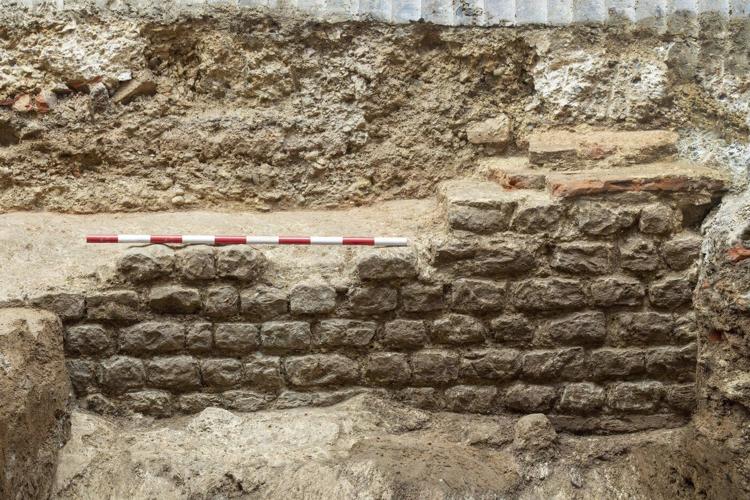
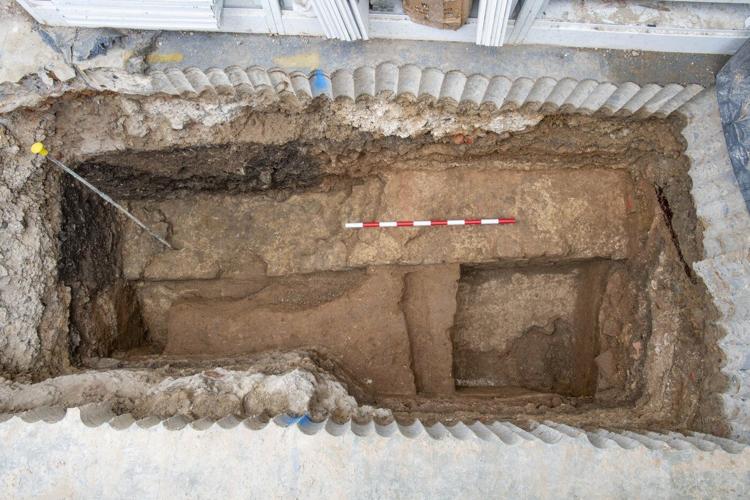
In this photo provided by MOLA, Museum of London Archaeology taken in summer 2024, a view of part of the wall of the Roman London Basilica which has been recently unearthed by a redevelopment of a City of London building in London. (MOLA via AP)
In this photo provided by MOLA, Museum of London Archaeology taken in summer 2024, a view of part of the wall of the Roman London Basilica which has been recently unearthed by a redevelopment of a City of London building in London. (MOLA via AP)
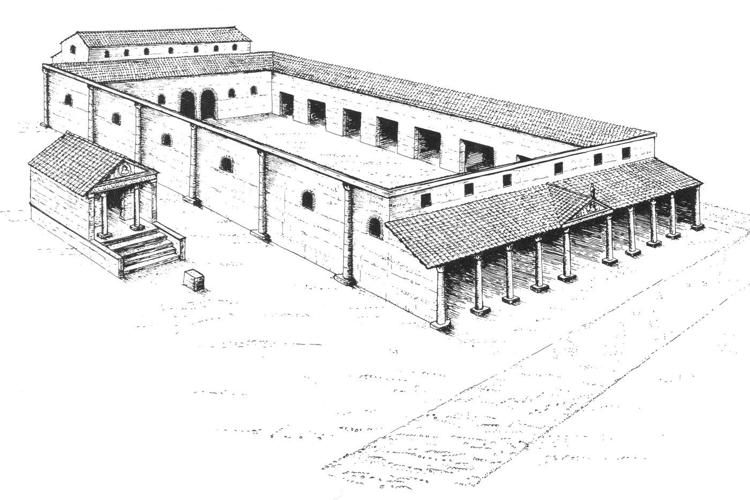
In this photo provided by Peter Marsden, a drawing of a representation of the Roman London Basilica which has been recently unearthed by a redevelopment of a City of London building in London. (Peter Marsden via AP)
In this photo provided by MOLA, Museum of London Archaeology taken in summer 2024, a view of part of the wall of the Roman London Basilica which has been recently unearthed by a redevelopment of a City of London building in London. (MOLA via AP)
AG
In this photo provided by MOLA, Museum of London Archaeology taken in summer 2024, a view of part of the wall of the Roman London Basilica which has been recently unearthed by a redevelopment of a City of London building in London. (MOLA via AP)
AG
In this photo provided by Peter Marsden, a drawing of a representation of the Roman London Basilica which has been recently unearthed by a redevelopment of a City of London building in London. (Peter Marsden via AP)
LONDON (AP) 鈥� Work to give 21st-century London yet another skyscraper has uncovered traces 鈥� in fact chunks 鈥� of the city鈥檚 origins almost 2,000 years ago.
Archaeologists exploring the site of a planned 32-story office tower announced Thursday that they have unearthed the remains of a Roman basilica that once stood at the heart of the city known as .
Excavations in the basement of a building slated to be demolished for the tower at 85 Gracechurch Street uncovered flint, brick and ragstone walls and foundations, up to 1 meter (over 3 feet) wide, 4 meters (13 feet) deep and two millennia old.
Sophie Jackson of Museum of London Archaeology called it 鈥渙ne of the most significant discoveries鈥� in years in London鈥檚 oldest quarter, the City 鈥� the where modern glass high-rises stand atop the remnants of Victorian, medieval and even earlier structures.
What鈥檚 been uncovered are the foundations of a two-story building, almost as big as an Olympic swimming pool. It was constructed between 78 and 84 A.D., about three decades after Roman troops invaded Britain and some 20 years after forces of the Celtic warrior queen Boudicca sacked the fledgling settlement.
The basilica was part of the forum, the social, political and commercial heart of Roman London, where people went to shop, mingle, seek justice and hear the latest edicts from political leaders. The newly discovered remains are believed to form part of the tribunal, a raised area of the forum where politicians and officials made decisions about the city鈥檚 governance.
鈥淚t鈥檚 the beating heart of the city,鈥� said Andrew Henderson-Schwartz, head of public impact at Museum of London Archaeology. 鈥淚t kind of towers above the city. And so it鈥檚 a real symbol of Roman power and authority.
鈥淲e鈥檙e talking about the early stages of London here, but it鈥檚 a real sign of investment in the city, even in its early infancy,鈥� he said.
Developer Hertshten Properties, which owns the site and has planning permission for a new office tower, has agreed to incorporate the remains into its plans and put them on display in a visitor center.
Henderson-Schwartz said the extent of the 鈥渁bsolutely massive鈥� foundations discovered in several test pits suggests an 鈥渆xtraordinary鈥� level of preservation.
Further digging could answer intriguing questions, including why the original forum was only used for 20 years before being replaced by a much larger one, which remained in use until the collapse of Roman rule in Britain three centuries later. Items such as writing tablets, styluses 鈥� even ancient trash 鈥� could give glimpses into the daily lives of Roman Londoners.
Property developers in Britain routinely have to consult archaeologists as part of their planning process, a practice that has from Saxon jewelry to medieval ice skates to the skeletons of
The latest discovery adds to the scant traces of Roman London that can be seen around the city, including a section of ancient wall, a portion of amphitheater beneath the Guildhall and a temple to the god Mithras which lies incongruously under the modern headquarters of information company Bloomberg.
"We do have these little windows into Roman London that are all over the city,鈥� Henderson-Schwartz said. 鈥淏ut this is really in some ways the site that connects them all together. This is the heart of Rome in London, where all the decisions were made.鈥�