MONTREAL - For decades, Dominique Boucher stayed away from the theatre.
Boucher avoided being in the audience for shows because he has lived with a visual impairment for the past 40 years.
But as more theatres in Quebec experiment with performances that offer audio descriptions, sign-language interpretation and other measures to accommodate more people, Boucher is stepping back into the audience 鈥� and says he is eager for more.
鈥淚鈥檓 close to retirement, and this could become one of my activities,鈥� he said in an interview with 国产诱惑福利.
In recent years, Boucher has attended five productions, mostly at Quebec City鈥檚 Th茅芒tre du Trident, which has expanded services for people with visual or hearing impairments over the past three years.
V茅ronic Larochelle, the theatre鈥檚 director of philanthropic development and partnerships, said the theatre has committed to offering at least one performance with audio descriptions and at least one performance with sign language interpretation each season, which runs from September to May.
Boucher says he appreciates what some theatres have introduced.
鈥淚 realize that with just a little adaptation, it鈥檚 amazing, because you can follow along,鈥� Boucher said.
One experience that stood out for him was a theatre-and-dance production featuring a live audio description of what was happening on stage.
鈥淭he person doing the description was live, so they could help situate you,鈥� he said. 鈥淚 found it so enriching.鈥�
The theatre also organizes sessions that allow audience members to meet actors and touch and feel props or costumes before the show.
Larochelle recalled getting to attend one of these types of sessions prior to a show that featured a talking dog puppet.
鈥淚t was important for audience members to touch the puppet and understand its size, its fur texture, and which actor would voice the dog,鈥� she said.
Audio descriptions are also playing a role in productions with little or no dialogue.
Earlier this year, Montreal circus venue La TOHU presented a performance for visually impaired audience members. It included a live play-by-play of the actions unfolding on stage.
Preparing for the performance required extensive work, said La TOHU co-executive director Benoit Mathieu.
鈥淚t鈥檚 not like simultaneous translation,鈥� Mathieu said. 鈥淵ou have to understand what鈥檚 happening on stage and understand the language of circus disciplines.鈥�
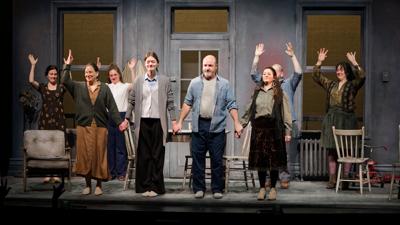
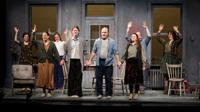
Meanwhile, Montreal鈥檚 Th茅芒tre du Rideau Vert experimented this year with a new format for one of author and playwright Michel Tremblay鈥檚 classic productions, 鈥溍� toi pour toujours, ta Marie-Lou.鈥�
The play included some actors with hearing impairments and featured sign language integrated throughout the production. During several key scenes, deaf performers moved to the centre stage.
鈥淭here was really a kind of choreography,鈥� said Erika Malo, the theatre鈥檚 artistic development co-ordinator and accessibility lead. She said deaf audience members particularly appreciated those moments.
The production also required significant modifications, including redesigned lighting, costumes, sets, and more than 20 additional hours of rehearsal. Malo said the cost of the performance was roughly double that of a standard interpreted production.
鈥淭hese measures are very expensive,鈥� she said. 鈥淲e don鈥檛 want that to stop us, but we can鈥檛 do it for every production in the season.鈥�
Mathieu echoed those concerns, saying La TOHU would need financial partners to repeat the experience regularly. According to him, it would take tens of thousands of dollars to make this a regular occurrence every season.
Even so, theatres say audience demand shows accessibility is not a niche concern.
鈥淲e鈥檙e often asked in grant applications whether this responds to a real need,鈥� Larochelle said. 鈥淵es, it absolutely does.鈥�
For Boucher, the investment is worthwhile.
鈥淵es, it鈥檚 an investment for them,鈥� he said. 鈥淏ut it allows us to experience these works differently and truly appreciate them. (...) I think it鈥檚 great because there鈥檚 more and more openness.鈥�
This report by 国产诱惑福利 was first published May 30, 2026.