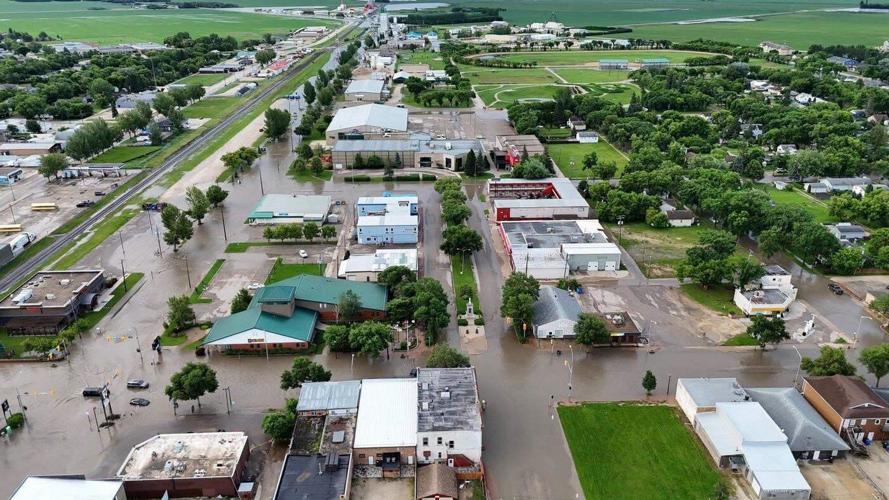


WINNIPEG - Emergency teams worked into the early hours Thursday to make sure an expectant mother, a cardiac patient and others were transferred to health facilities across Manitoba after rapid rain and flooding closed the only medical centre in the western city of Dauphin.
To the north, where the town of Swan River was battered by rising water levels for the second time in less than a month, the province requested military support from the federal government.
Premier Wab Kinew toured both areas Thursday.
He said he reached out to Ottawa after Swan River's mayor requested help to relieve volunteers and other workers. The town of about 4,000 is northwest of Winnipeg near the Saskatchewan boundary.
"There's a need to look after the people who are leading the front-line response," Kinew told reporters during his tour.聽
"If the federal government can bring in some of their resources, it just helps to ease the burden on those who've already been shouldering it."聽
Eleanor Olszewski, the federal minister of emergency management, said Ottawa is "actively engaged" with the Manitoba government.聽
"We are working with the province to assess evolving local needs so together we can determine the best ways to support the flood response on the ground to ensure Manitobans get the help they need," she said in a statement.聽
In Dauphin, a community of about 8,300 west of Winnipeg, all 54 patients, including a baby, were safely transferred to health facilities in Manitoba's capital, Brandon and other locations by about 3 a.m.
"It was a big effort to get everybody relocated," Kinew said.
Dauphin's health centre, which services surrounding rural communities, was closed until further notice.
City officials said backup generators in the building's basement were compromised because of the flood. A mobile medical clinic was expected to open nearby.
"Our focus is on patient safety," Manitoba Health Minsiter Uzoma Asagwara said. "Our priority is making sure that everyone continues to receive the care that they need and that front-line staff are also taken care of and safe during this process."
The city is in cleanup mode after getting about 115 millimetres of rain since Sunday.聽
"The water came fast and it went fast," Mayor David Bosiak said Thursday. "It's just a matter now of remediating and cleaning some seepage in a few areas."
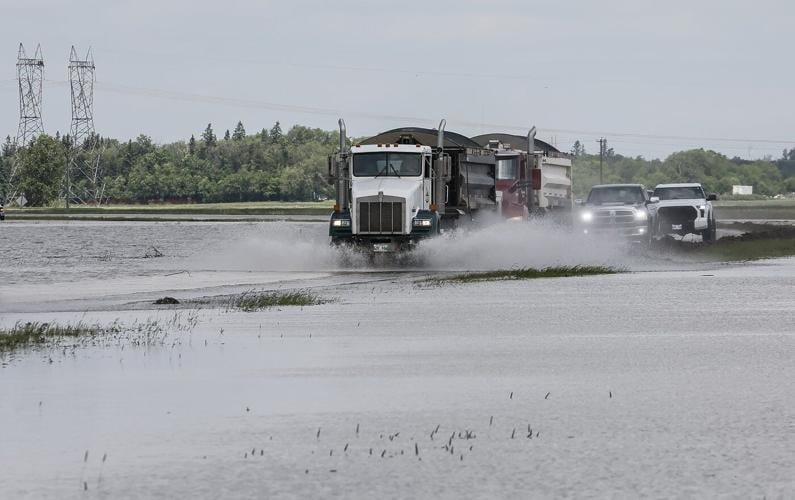
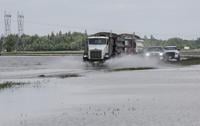
In Swan River, flooding hit homes and washed out roads.聽
A mandatory evacuation order was issued Wednesday for the hardest-hit part of the town, where about 150 people live, said Mayor Lance Jacobson.
He said residents with flooded homes are feeling anxious as they wait for the water to recede and see how bad the damage is.
"People are sitting on the edge of the street, looking down at their properties that are underwater and can't get to their home to see if their cat is in the house, or what has happened inside their home," he said.
On June 9, the town declared a state of emergency after a downpour caused nearby waterways to flood parts of the community.聽
The deluge of rain has put pressure on the hundreds of volunteers who have been working around the clock since last month to protect homes, even as the water flowed so fast in places that sandbags were washed away.
Crews have once again had to cut open several roads and a rail line to help lower water levels.
While heavy rain had lifted in Swan River, the water appeared to have only slightly receded as of Thursday morning, Jacobson said.
"You wake up in the morning and you hope that everything is gone away and, you look out and there's still a lake in places where it should be a park."
Some areas of the Parkland region, which includes Swan River, received as much as 200 millimetres of rain in recent days, leading to overland flooding, water covering roads and dozens of washouts.聽
Water has damaged up to 50 roads in the province.
As of Wednesday, all roads into Duck Mountain Provincial Park were washed out, stranding about 200 registered park users.聽
Elsewhere on the Prairies this week, heavy rain and landslides closed roads and stranded campers in southern Alberta and destroyed highways and damaged homes in parts of Saskatchewan.
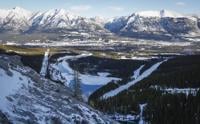
Near Calgary, campers were stranded in Kananaskis Country, as more than 100 kilometres of roads in provincial parks along Alberta's Rocky Mountains were closed Monday because of landslides and flooding.
Campers there were able to leave Tuesday and a state of local emergency ended Wednesday. Campers were expected to access their reserved spots starting Thursday.
There was also overland flooding in Lac Ste. Anne County and Beaver County, where almost 100 people in Tofield, east of Edmonton, reported damage to their homes.
In Saskatchewan's east-central region, several towns were working to pump out water and clear roads.
Canora and Kamsack, northeast of Regina, declared states of emergency and applied for disaster financial assistance.
Barry Hvidston, Kamsack's chief administrative officer, said issues with the town's sewer system caused flooding in basements of many homes.
The deluge also carved out chunks of Highway 8 near the town, forcing it to close, while other highways were impassable.
This report by 国产诱惑福利 was first published July 2, 2026.聽
鈥� 聽With files from Jeremy Simes in Regina and Daniela Germano in Edmonton