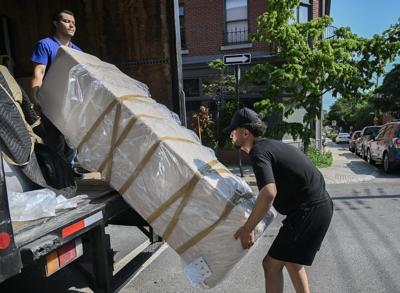
Adam Samir, right, and Marouane Bahharr load a piece of furniture onto a truck on Quebec's unofficial moving day in Montreal, Wednesday, July 1, 2026. THE CANADIAN PRESS/Graham Hughes
Adam Samir, right, and Marouane Bahharr load a piece of furniture onto a truck on Quebec's unofficial moving day in Montreal, Wednesday, July 1, 2026. THE CANADIAN PRESS/Graham Hughes
MONTREAL - Sidewalks in Montreal's Plateau-Mont-Royal neighbourhood were filled with boxes, mattresses and furniture Wednesday morning as residents prepared for the province's unofficial moving day under soaring temperatures.
"We wanted to get ahead of the heat," said Marco Aubut, who was helping with a move in Montreal's Plateau-Mont-Royal neighbourhood. "We're aiming to be done before noon."
He said the group planned to finish the move before noon, leaving the unpacking for later in the day when they could work indoors.
Some Quebecers moving into new homes on the province's traditional July 1 moving day got an early start Wednesday as a heat warning covering much of southern Quebec prompted many to finish the heaviest work before temperatures climbed.
Environment Canada forecast daytime highs between 30 and 33 C, with humidex values reaching 40 to 45. The heat warning was expected to remain in effect through Saturday.
For Julien Bolduc, who was moving apartments in Montreal on Wednesday, the heat made an already demanding day even more challenging.
Bolduc said it was only the second time in his life that he had moved on July 1, and the hottest he could remember. “I don’t remember it ever being this hot,� he said as he took a break from carrying boxes.
In a social media publication, Montreal public health officials urged people to start moving as early as possible, drink plenty of water and take frequent breaks to reduce the risk of heat-related illness.
At a news conference Tuesday morning, Dr. David Keiser of Montreal public health said it was ideal to avoid heavy lifting during the hottest part of the day. He recommended starting as early as possible or waiting until later in the afternoon.
Dagher said the most common moving-related injury — by far — is to the lower back. Crushed fingers and toes, sprained ankles or knees are also common.
Dagher compared moving to a marathon, warning against rushing during sustained effort. She said it was best to plan the day carefully to ensure those moving had enough help and respected their limits.
Environment Canada said heat warnings are issued when high temperatures are expected to pose an elevated risk of illnesses such as heat exhaustion and heat stroke.
This report by ¹ú²úÓÕ»ó¸£Àû was first published July 1, 2026.
– with files from Erika Morris and Katrine Desautels in Montreal