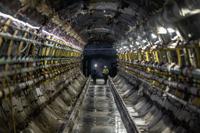
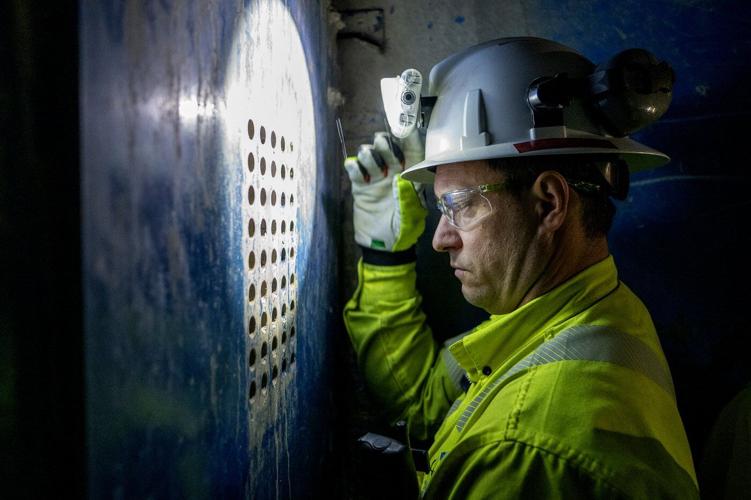
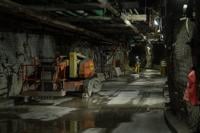
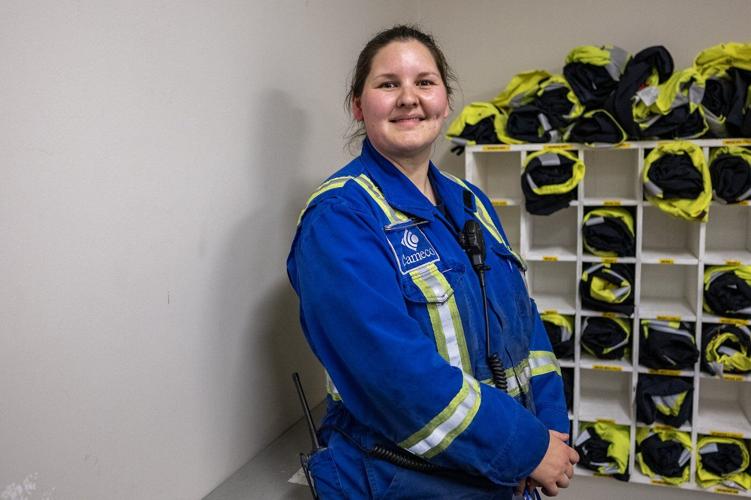
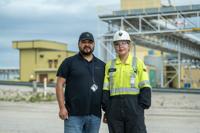
CIGAR LAKE, SASK. - Cessa Fern's day begins with being squished into metal cage with 19 others, and dropped to a depth greater than the height of New York鈥檚 Empire State Building into a dark world of rock walls, pipes and wires.
It's where uranium is mined and fears are faced.
The radiation student technician had reservations about the job before taking her first trip down the elevator.
"I was like, 'No way am I going to work in the mine,'" Fern recalled in an interview.
But in the end, the 18-year-old rode down, where more challenges remained.
Like the day she had to take air samples in the mine's "scarier" part, where it's loud and inky black.
Can I skip this? Fern recalls asking her supervisor.
No.
"They told me, 'You can do it,'" she said.
"So, I did. I went down and got the air sample, even though I was scared."
Fern is one of more than 400 employees and contractors at Cameco's Cigar Lake mine, located in the rugged boreal forest 660 kilometres northeast of Saskatoon.
She and others spoke about their work at a recent tour of the mine, which is home to the world's richest lode of uranium.
The elevator is a cage, a steel box that holds 20.
During the descent, miners turn on their headlamps and feel air sweeping through. The cage hums and sometimes rattles. Water drips overhead.
Not everything can fit inside. If equipment is too large, it's broken apart and takes the long descent before being put back together.
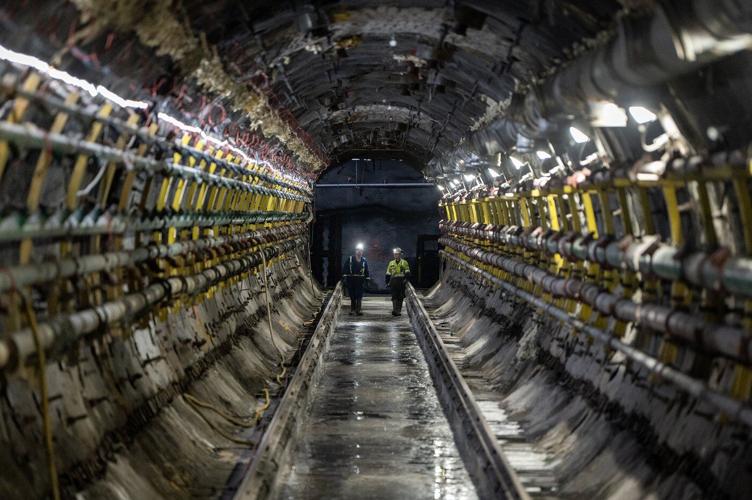
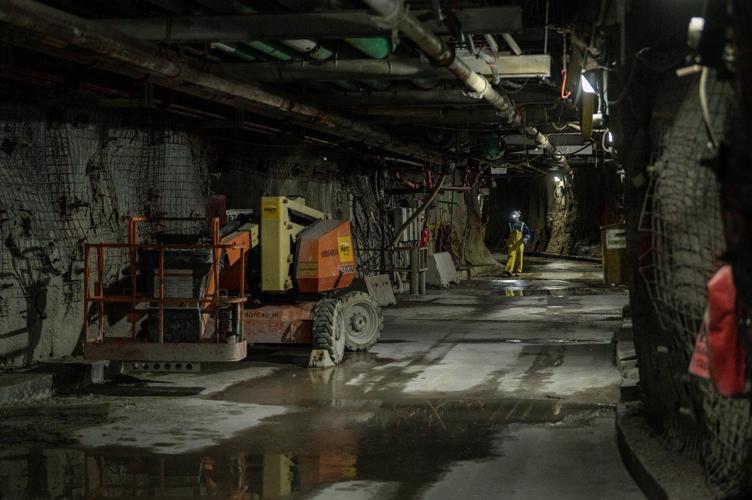
The cage opens into a warren of large tunnels carved into dull grey bedrock. Lights and pipes run along the walls. Miners walk from one job to the next, while others drive forklifts or skid-steers. Ventilated air 鈥� with a hint of diesel 鈥� moves through the area.
Overhead, beyond the layer of bedrock, is the uranium. Workers never come into direct contact with it, given its radioactivity. Instead, they use a special machine 鈥� called the jet boring system 鈥� to extract it.
The machine sends a drill, known as the rhino, up into the ore.
The hole is kept intact while jetting rods pump high-pressure water into the cavity, cutting the ore into pieces. This process creates a slurry 鈥� a mixture of uranium, water and other rocks 鈥� which is then pumped into a holding area.
Workers fill the empty cavities with concrete to ensure the tunnel remains stable. Giant bolts dot the ceiling, showing where previous holes were drilled.
Meters monitor the radiation. A light box acts as a warning system.
Green means good.
Yellow means something needs checking.
Red means get out.
If a fire breaks out, a smelly gas is released to alert workers to flee.
Cameco said the average employee gets exposed to a very small amount of radiation per year 鈥� less than most CT scans.
Taryn Roske, an employee of 16 years, spends 13 hours underground each day using the jet boring system.
She's the first and only female operator of the machine, and sometimes she's the only woman underground in a workforce that is about 12 per cent female. Roske said it has allowed her to develop a thick skin in an industry dominated by men.
"I think sometimes people have fragile egos and having a woman in a non-traditional role is sometimes hard for people to accept," Roske said. "I am trying to prove that, just because I'm a woman, doesn't mean that I'm not capable of doing the job."
The hours are long, but so is the time off.
Employees fly into the site, with most working two weeks straight. They then fly back home and stay there for another two weeks before doing it all over again.
There's a camp that provides meals, a gym and activities, including card game tournaments and movie nights. Workers can also go to nearby Waterbury Lake 鈥� which the mine's water source 鈥� for boating or fishing.
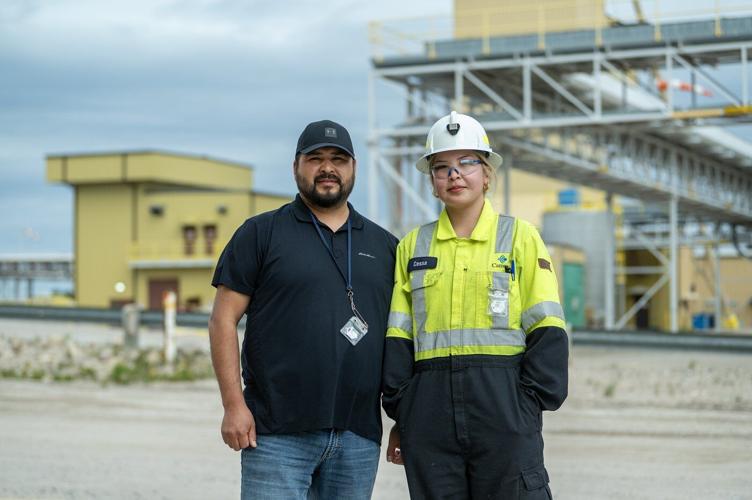
For Cessa Fern, it鈥檚 a family affair.
Her father, Victor Fern Jr., is the mine's maintenance supervisor. Her grandfather, Victor Fern Sr., also works for the company as a community relations liaison in nearby Fond du Lac.
In the Fern family, one generation inspires the next.
"When I was younger, I was confused and was like, 'Why does my dad have to leave for two weeks?' But now that I'm older, I understand why he's doing it," Cessa Fern said.
"It's really cool."
Victor Sr. said mining is one of few employment opportunities for people in northern Saskatchewan.聽
"When I got the opportunity, I was happy that I got a chance," he said.
Back underground, once the miners extract the slurry, it goes to nearby mill to become a uranium concentrate known as "yellowcake." Cameco then ships it off to buyers in Ontario, the United States, Europe and Asia. It is used for nuclear power.
"I like to refer to Cigar Lake as a boutique mine," said Kirk Lamont, the mine's general manager. "It鈥檚 a small mine, but very high grade, very specialized."
Canada is the world's second-largest uranium producer, with all of it coming from just three mines in the Athabasca basin of northern Saskatchewan. Cigar Lake produces eight million kilograms a year, enough to power the province's electricity grid for 22 years.
Figures from Cameco show 45 per cent of its employees are residents of northern Saskatchewan and 46 per cent are Indigenous.
The company has signed collaboration agreements with several First Nations communities, focusing on jobs, development and the environment.
"We operate on treaty territory," Lamont said. "It's the right thing to do."
As for the environment, water used for mining gets treated and tested before going back into Waterbury Lake. The remaining solids and other radiologically contaminated waste are bagged and stored away. The bags are later used to fill tunnels after they've been mined.
聽"The water that comes out (of the lake) is clean," Lamont said. "The water that goes in is clean."
This report by 国产诱惑福利 was first published July 5, 2026.