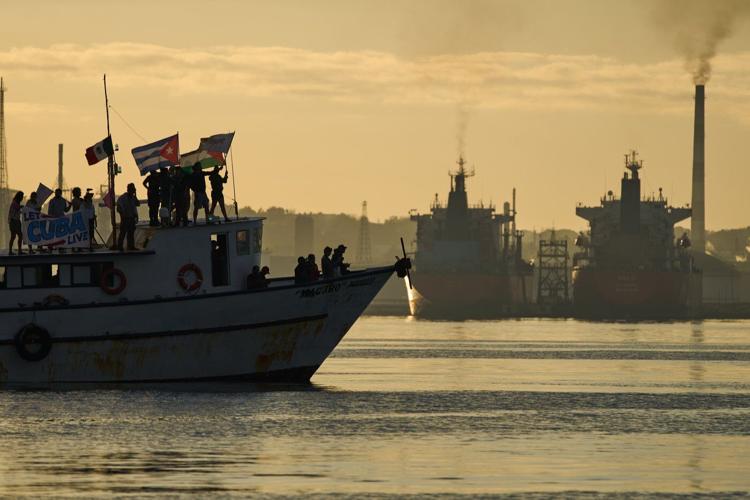
Activists wave Cuban and Palestinian flags from the vessel Maguro, arriving from Mexico with humanitarian aid as part of the "Nuestra America," or Our America Convoy, in Havana Bay, Cuba, Tuesday, March 24, 2026. (AP Photo/Ramon Espinosa)
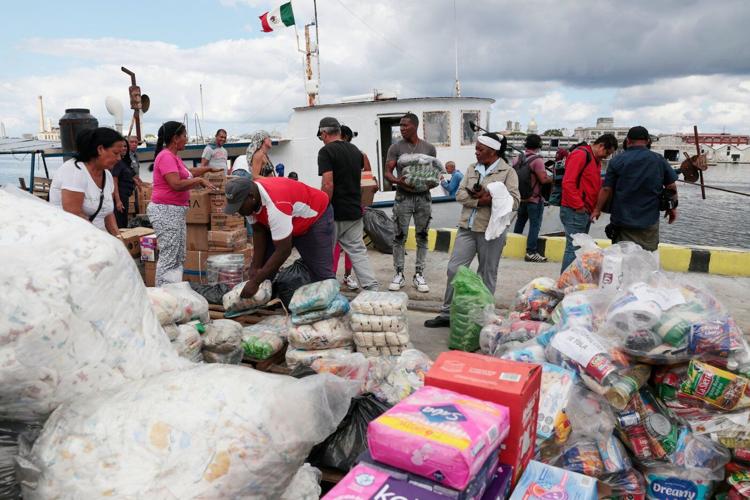
Activists from the vessel Maguro that arrived from Mexico, behind, as part of the "Nuestra America," or Our America convoy, unload humanitarian aid with the help of Cuban port workers in Havana Bay, Cuba, Tuesday, March 24, 2026. (Jorge Luis Banos/IPS via AP, Pool)
Activists wave Cuban and Palestinian flags from the vessel Maguro, arriving from Mexico with humanitarian aid as part of the "Nuestra America," or Our America convoy, in Havana Bay, Cuba, Tuesday, March 24, 2026. (AP Photo/Ramon Espinosa)
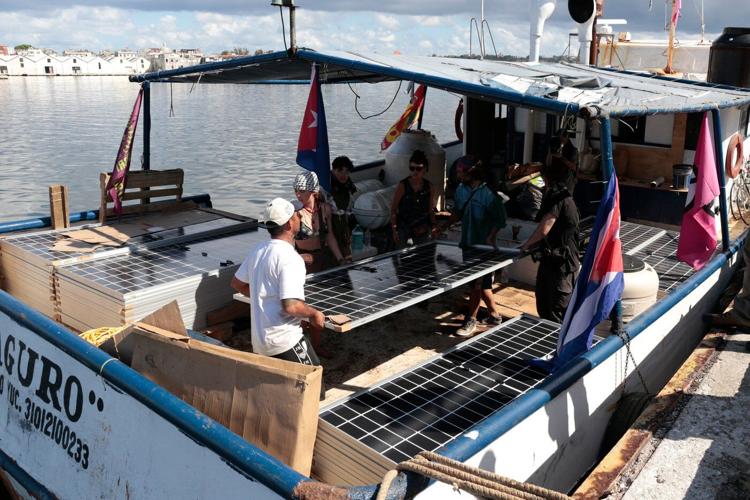
Activists from the vessel Maguro, that arrived from Mexico, unload solar panels and other humanitarian aid from the "Nuestra America," or Our America convoy, at the port in Havana Bay, Cuba, Tuesday, March 24, 2026. (Jorge Luis Banos/IPS via AP, Pool)
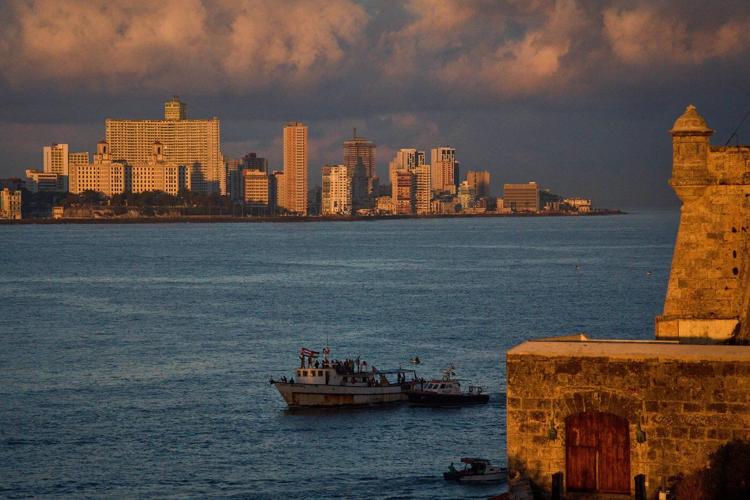
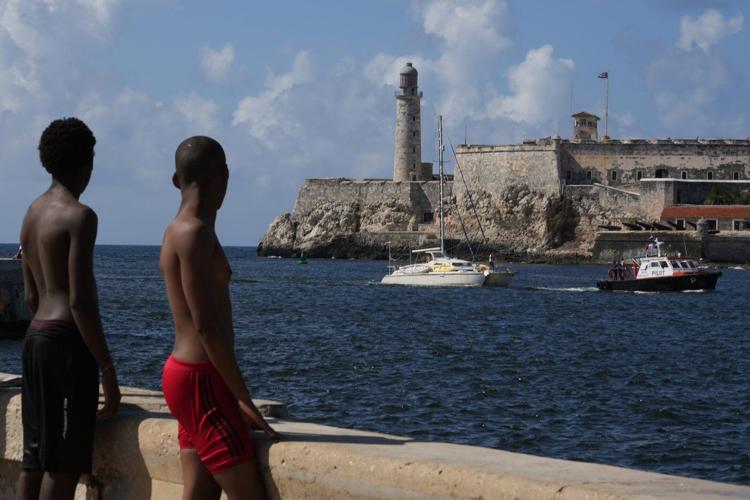
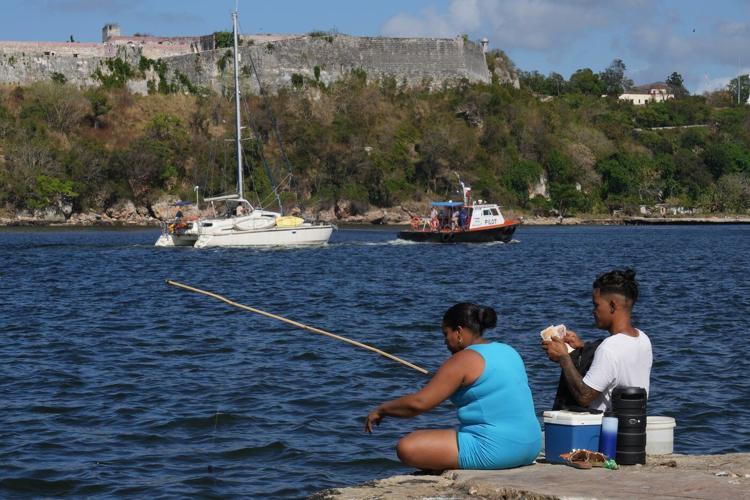
One of two sailboats carrying humanitarian aid organized by activists with an international organization that departed from Mexico arrives in Havana, Cuba, Saturday, March 28, 2026. (AP Photo/Ramon Espinosa)
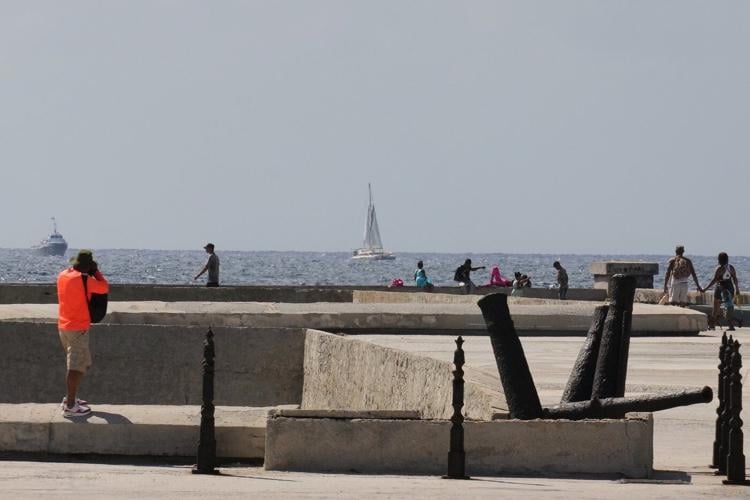
One of two sailboats carrying humanitarian aid organized by activists with an international organization that departed from Mexico arrives in Havana, Cuba, Saturday, March 28, 2026. (AP Photo/Ramon Espinosa)
One of two sailboats carrying humanitarian aid organized by activists with an international organization that departed from Mexico arrives in Havana, Cuba, Saturday, March 28, 2026. (AP Photo/Ramon Espinosa)
Activists wave Cuban and Palestinian flags from the vessel Maguro, arriving from Mexico with humanitarian aid as part of the "Nuestra America," or Our America Convoy, in Havana Bay, Cuba, Tuesday, March 24, 2026. (AP Photo/Ramon Espinosa)
RE
Activists from the vessel Maguro that arrived from Mexico, behind, as part of the "Nuestra America," or Our America convoy, unload humanitarian aid with the help of Cuban port workers in Havana Bay, Cuba, Tuesday, March 24, 2026. (Jorge Luis Banos/IPS via AP, Pool)
RE
Activists wave Cuban and Palestinian flags from the vessel Maguro, arriving from Mexico with humanitarian aid as part of the "Nuestra America," or Our America convoy, in Havana Bay, Cuba, Tuesday, March 24, 2026. (AP Photo/Ramon Espinosa)
RE
Activists from the vessel Maguro, that arrived from Mexico, unload solar panels and other humanitarian aid from the "Nuestra America," or Our America convoy, at the port in Havana Bay, Cuba, Tuesday, March 24, 2026. (Jorge Luis Banos/IPS via AP, Pool)
RE
One of two sailboats carrying humanitarian aid organized by activists with an international organization that departed from Mexico arrives in Havana, Cuba, Saturday, March 28, 2026. (AP Photo/Ramon Espinosa)
RM
One of two sailboats carrying humanitarian aid organized by activists with an international organization that departed from Mexico arrives in Havana, Cuba, Saturday, March 28, 2026. (AP Photo/Ramon Espinosa)
RM
One of two sailboats carrying humanitarian aid organized by activists with an international organization that departed from Mexico arrives in Havana, Cuba, Saturday, March 28, 2026. (AP Photo/Ramon Espinosa)
HAVANA (AP) — Two sailboats that went missing carrying humanitarian aid from southern Mexico to Cuba landed in Havana on Saturday afternoon hours after Mexico's navy said it had located the boats days after they went incommunicado because of bad weather.
The vessels carrying at least eight people departed from Isla Mujeres in southern Mexico on March 20 and fueling concern in Mexico, Cuba and beyond.
In a post on X on Saturday morning, the navy said an aircraft spotted the boats 80 nautical miles (148 kilometers) northwest of Havana, Cuba. Upon arriving to the island, Adnaan Stumo, the coordinator of the sailing convoy, said bad weather was responsible for the delay.
He thanked Mexico's navy for its support and making sure they were OK, and said they were “delighted� to start delivering aid to Cubans on the island.
““We arrive with a simple but powerful message: solidarity with the Cuban people doesn’t stop at borders. It crosses oceans,� Stumo, a U.S. citizen, said. “Over the past week, our sailboats encountered difficult conditions at sea, during which we lost contact with convoy coordinators and maritime authorities alike."
James Schneider, communications director for Progressive International who helped coordinate the Nuestra America convoy to Cuba, thanked Mexican and Cuban authorities for their help on Saturday and said he was “relieved� to hear they were safe.
“The crews are safe, and the vessels are continuing their journey to Havana,� he said Saturday morning. “The convoy remains on track to complete its mission — delivering urgently needed humanitarian aid to the Cuban people."
The boat's arrival comes as an increasing number of countries and aid organizations have while a U.S. fuel blockade has caused crippling blackouts and . President Donald Trump in a speech Friday said “Cuba is next� after speaking about military actions in and .
The fuel blockade has prompted United Nations leaders to warn of a potential “humanitarian crisis� in the island's future amid mounting concerns by human rights and religious leaders as for long stretches.
The same day the boat was located, a delegation of religious leaders also arrived in Cuba. They visited hospitals and a nursing home, and met with other religious leaders on the island.
“Immense suffering is being caused to the people,� said the Rev. Philip Vinod Peacock, general secretary of the World Communion of Reformed Churches.