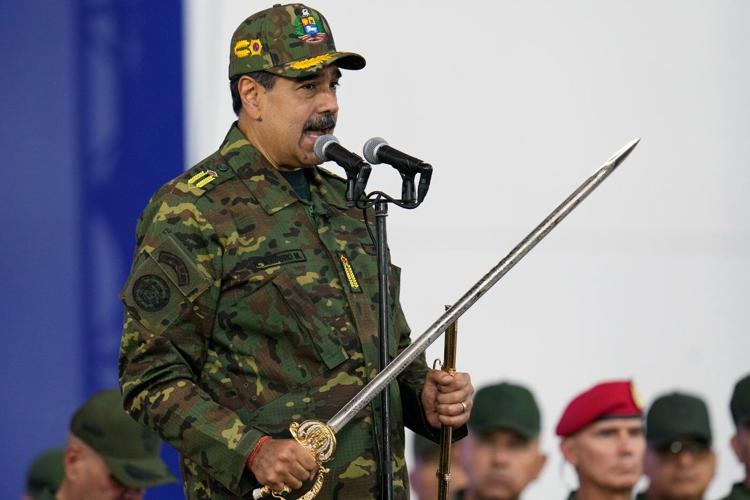
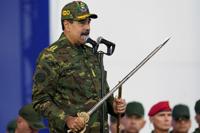
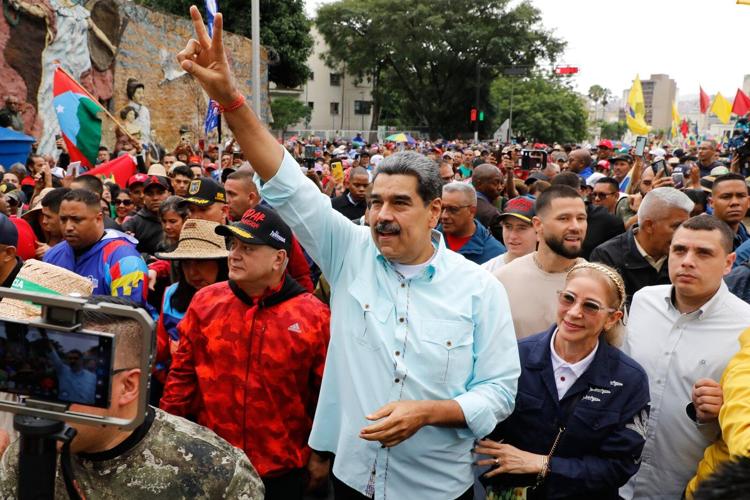
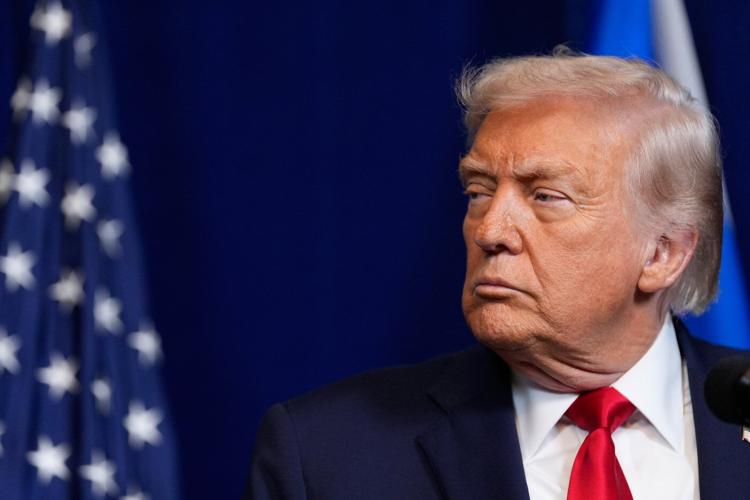
WASHINGTON (AP) — President Donald Trump had long threatened that he could order military strikes on targets on Venezuelan territory after months of attacks on boats accused of carrying drugs from the South American country. President Nicolás Maduro of Venezuela said the U.S. military operations were a thinly veiled effort to oust him from power.
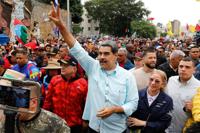
On Saturday, the U.S. conducted a “large-scale strike� against Venezuela. Maduro and his wife, Cilia Flores, were taken from their home on a military base and were aboard a U.S. warship on their way to New York, where they were to face . An indictment accused them of a role in narco-terrorism conspiracy.
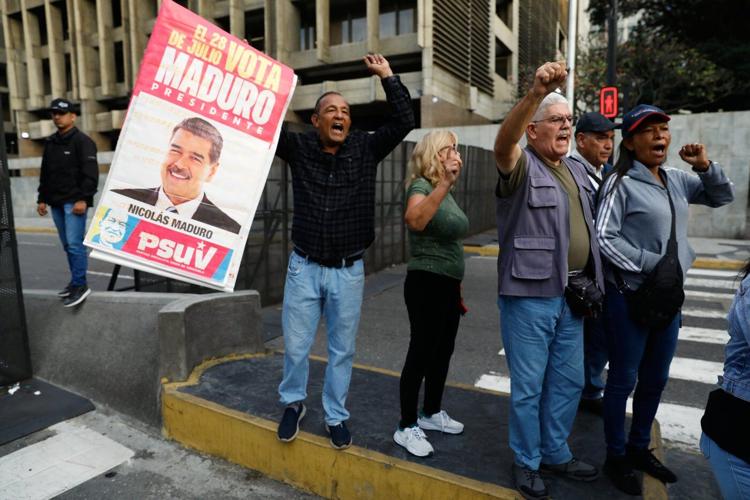
The Venezuelan government called it an “imperialist attack� and urged citizens to take to the streets.
Before the escalation, there had been 35 known strikes against alleged drug smuggling boats in South American waters since early September that killed at least 115 people, according to announcements from the Republican administration.
The U.S. had sent to the region, the largest buildup of forces in generations.
The White House said Washington was in to halt the flow of narcotics into the United States, while U.S. officials alleged that Maduro supported the international drug trade.
Here is a timeline of the U.S. military actions and related developments:
Jan. 20, 2025
Trump that paved the way for criminal organizations and drug cartels to be named “foreign terrorist organizations.� They included Tren de Aragua, a Venezuelan street gang.
Trump’s central claim that Maduro’s administration was working with Tren de Aragua and orchestrating drug trafficking and illegal immigration into the U.S.
Feb. 20
The Trump administration eight Latin American crime organizations as foreign terrorist organizations.
The label is normally reserved for groups such as a-Qaida or the Islamic State that use violence for political ends, and not for profit-focused crime rings.
Aug. 19
The U.S. military to the waters off Venezuela.
The naval force in the Caribbean grew within weeks to include three amphibious assault ships and other vessels, carrying about 6,000 sailors and Marines and a variety of aircraft.
The U.S. sent F-35 fighter jets to Puerto Rico in September, while a Navy submarine carrying cruise missiles operated off South America.
Sept. 2
The U.S. against what Trump said was a drug-carrying vessel that departed from and was operated by Tren de Aragua.
Trump said all 11 people on the boat were killed. He posted a short video clip of a small vessel appearing to explode in flames.
Sept. 10
, Democratic senators said the administration had provided “no legitimate legal justification� for the strike.
Sen. Jack Reed of Rhode Island, the top Democrat on the Senate Armed Services Committee, said the U.S. military was not “empowered to hunt down suspected criminals and kill them without trial.�
Sept. 15
The U.S. military against an alleged drug boat, killing three people.
Asked what proof the U.S. had that the vessel was carrying drugs, Trump told reporters that big bags of cocaine and fentanyl were spattered all over the ocean. Images of what Trump described were not released by the military or the White House.
Sept. 19
Trump said the U.S. military carried out against an alleged drug-smuggling vessel. Several senators and human rights groups continued of the strikes, describing them as a potential overreach of executive authority.
Oct. 2
Trump and said the U.S. was now in an “armed conflict� with them, according to an administration memo obtained by The Associated Press.
The memo appeared to represent an extraordinary and drew criticism from some lawmakers, including Republican Sen. Rand Paul of Kentucky.
Oct. 3
Defense Secretary Pete Hegseth said he ordered he accused of carrying drugs.
Oct. 8
Senate Republicans that would have required the president to seek authorization from Congress before further military strikes.
Oct. 14
against a small boat accused of carrying drugs, saying it killed six people.
Oct. 15
Trump confirmed to conduct covert operations inside Venezuela and said he was weighing carrying out land operations in the country.
He declined to say whether the CIA has authority to take action against .
Oct. 16
The Navy admiral who oversaw military operations in the region in December.
Adm. Alvin Holsey became leader of U.S. Southern Command only the previous November, overseeing an area that encompasses the Caribbean and waters off South America. Such postings typically last three years to four years.
Oct. 16
Trump said the U.S. struck a sixth suspected drug-carrying vessel in the Caribbean, who were on the semisubmersible craft.
The president later said the survivors would be , their home countries, “for detention and prosecution.� Repatriation avoided questions about what their legal status would have been in the U.S. justice system.
Oct. 17
The U.S. military that Hegseth said was carrying “substantial amounts of narcotics� and associated with a Colombian rebel group, . Three people are killed.
Oct. 20
Washington Rep. Adam Smith, top Democrat on the House Armed Services Committee, called for a hearing on the boat strikes.
“Never before in my over 20 years on the committee can I recall seeing a combatant commander leave their post this early and amid such turmoil," Smith said in a statement of Holsey's impending departure. “I have also never seen such a staggering lack of transparency on behalf of an Administration and the Department to meaningfully inform Congress on the use of lethal military force.�
Oct. 21
launched its eighth strike against an alleged drug-carrying vessel, killing two people in the eastern Pacific.
The attack was an expansion of the military’s targeting area to the waters off South America where much of the cocaine from the world’s largest producers is smuggled.
Oct. 22
Hegseth announced the ninth strike, another in the eastern Pacific, saying three men are killed.
Oct. 24
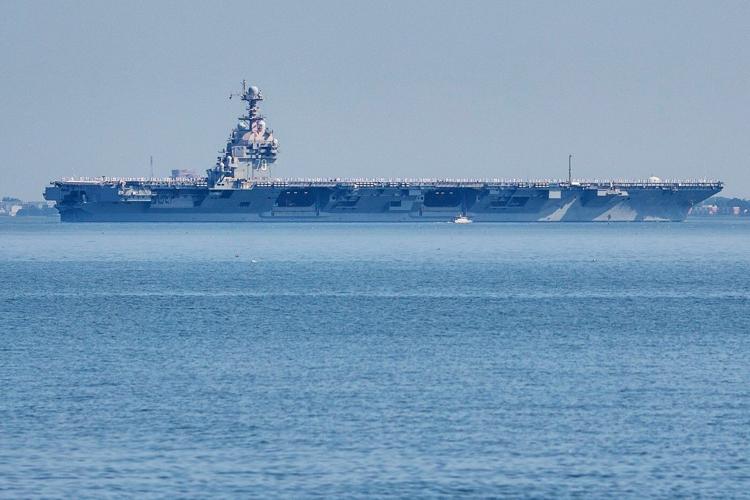
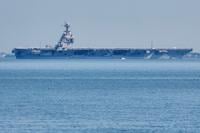
Hegseth ordered the U.S. military's most advanced aircraft carrier, the USS Gerald R. Ford, to the region in a significant escalation of .
Oct. 24
Hegseth said the military on a suspected drug-running boat, leaving six people dead.
Oct. 27
Hegseth said were carried out in the eastern Pacific, killing 14 people and leaving one survivor.
Hegseth said Mexican authorities “assumed responsibility for coordinating the rescue� of the sole survivor, who was presumed dead after Mexico suspended its search.
Oct. 29
Hegseth said the U.S. military on a boat he said was carrying drugs in the eastern Pacific, killing all four people aboard in the 14th attack.
Oct. 29
Virginia Sen. Mark Warner, the ranking Democrat on the Senate Intelligence Committee, said the administration , but not Democrats, on the boat strikes.
The Senate at the time was facing a potential vote on a war powers resolution that would have prohibited strikes in or near Venezuela without congressional approval.
Oct. 31
U.N. human rights chief Volker Türk into the strikes, in what appeared to be the first such condemnation of its kind from a U.N. organization.
Ravina Shamdasani, a spokeswoman for Türk’s office, relayed his message at a briefing: "The U.S. must halt such attacks and take all measures necessary to prevent the extrajudicial killing of people aboard these boats.�
Nov. 1
Hegseth announced , saying three people were killed.
Nov. 4
In the , Hegseth posted on social media that two people were killed aboard a vessel in the eastern Pacific.
Nov. 6
Hegseth announced the , which killed three people.
Senate Republicans that would have limited Trump's ability to order an attack on Venezuelan soil without congressional authorization. Lawmakers from both parties had demanded , but Republicans appeared more willing to give Trump leeway to continue his .
Nov. 9
The U.S. military in the eastern Pacific, killing six people, according to an announcement from Hegseth the following day.
Nov. 10
The on a boat accused of transporting drugs killed four people in the Caribbean, according to a social media post from the U.S. military's Southern Command.
Nov. 11
Venezuela’s government of troops and volunteers for two days of exercises prompted by the U.S. military buildup.
Defense Minister Vladimir Padrino López asserted that Venezuela’s military was “stronger than ever in its unity, morale and equipment.�
Nov. 15
after the U.S. military conducted its 21st strike on an alleged drug-smuggling boat in the eastern Pacific, according to a post from Southern Command a day later.
Nov. 16
The Ford , a major moment in the Trump administration's show of force.
The aircraft carrier's arrival brought the total number of troops in the region to around 12,000 on nearly a dozen Navy ships in what Hegseth said was “Operation Southern Spear.�
Nov. 16
Trump said the U.S. “ � with Maduro and “Venezuela would like to talk,� without offering details.
“I’ll talk to anybody,� Trump said. “We’ll see what happens.�
Dec. 4
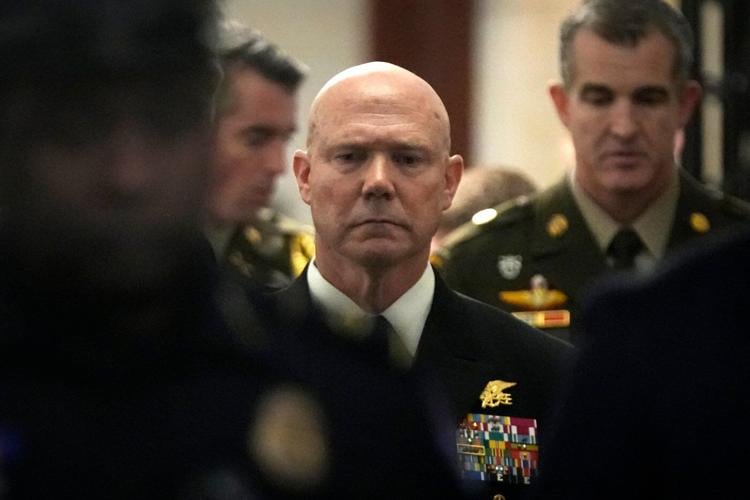
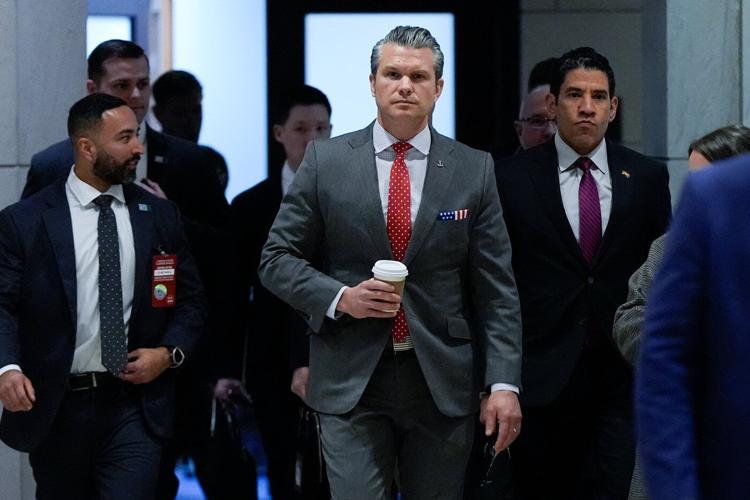
Adm. Frank “Mitch� Bradley appeared for closed-door classified briefings at the Capitol as lawmakers began the strikes. The investigation started after reports that Bradley ordered a follow-on attack that killed the survivors of the first strike on Sept. 2 to comply with Hegseth’s demands.
Sen. Tom Cotton, R-Ark., later told reporters that “Bradley was very clear that he was given no such order, to give no quarter or to kill them all."
Democrats said they found the video of the entire attack disturbing.
Smith said the survivors were “basically two shirtless people clinging to the bow of a capsized and inoperable boat, drifting in the water — until the missiles come and kill them.�
Dec. 4
Four people were killed in on an alleged drug-smuggling boat in the eastern Pacific, according to a post from Southern Command.
Dec. 10
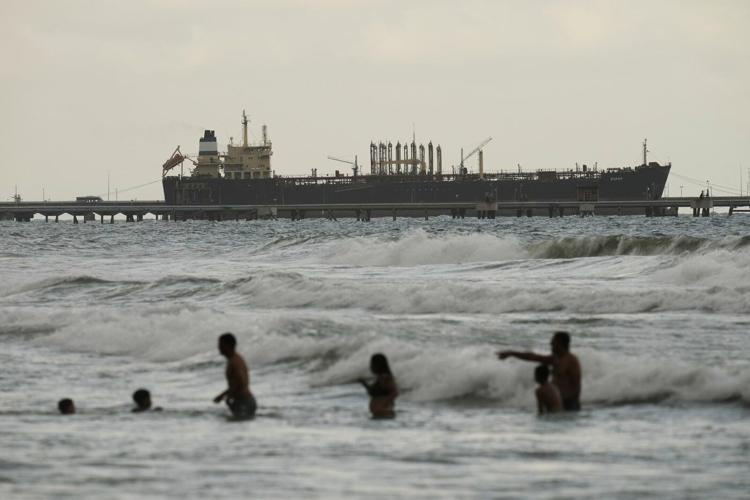
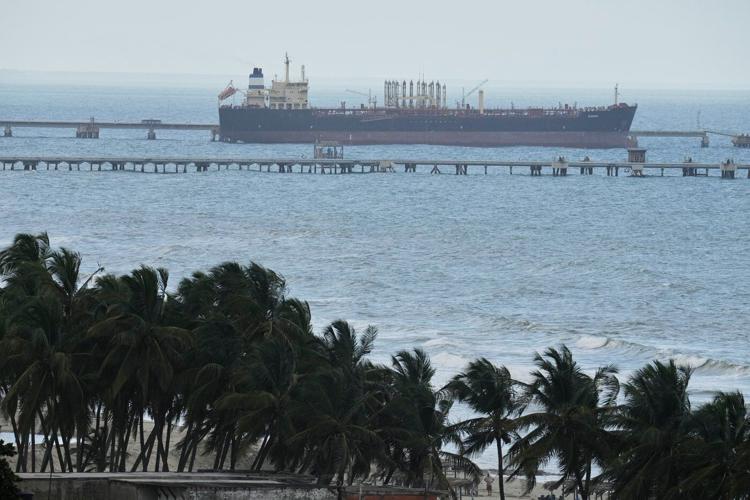
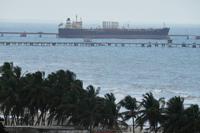
The U.S. off the coast of Venezuela after the ship left that country with about 2 million barrels of heavy crude.
Attorney General Pam Bondi said the tanker was involved in “an illicit oil shipping network supporting foreign terrorist organizations.� Venezuela's government said the seizure was "a blatant theft and an act of international piracy.�
Dec. 15
The U.S. military struck three alleged drug-smuggling boats, , in the eastern Pacific Ocean, Southern Command announced.
Dec. 16
Hegseth said the Pentagon of the Sept. 2 strike that killed two survivors, even as questions mounted in Congress about the attack and the overall campaign near Venezuela.
Dec. 16
Trump said he was of all “sanctioned oil tankers� going into and out of Venezuela, a move that seemed designed to put a tighter chokehold on the South American country’s oil-dependent economy.
Trump alleged that Venezuela was using oil to fund drug trafficking, terrorism and other crimes. He pledged to continue the military buildup until Venezuela returned to the U.S. oil, land and assets, though it was unclear why Trump felt the U.S. had a claim.
Dec. 17
The U.S. military said it attacked a boat accused of smuggling drugs in the eastern Pacific Ocean, .
House Republicans that would have put a check on Trump’s power to use military force against drug cartels and Venezuela. They were the first votes in the House after Senate Republicans .
Dec. 18
The U.S. military said it conducted two more strikes against boats that were allegedly smuggling drugs in the eastern Pacific, .
Dec. 20
Homeland Security Secretary Kristi Noem said the U.S. Coast Guard, with help from the Defense Department, stopped a second oil tanker off the coast of Venezuela.
Dec. 22
Trump confirmed that the U.S. Coast Guard was chasing another oil tanker that the administration described as part of the “dark fleet.�
The U.S. military said it accused of smuggling drugs in the eastern Pacific Ocean, killing four people.
Dec. 29
Trump told reporters that the U.S. struck a facility where boats accused of carrying drugs “load up.� He declined to say whether the U.S. military or the CIA carried out the strike on the dock or where it occurred. He did not confirm it happened in Venezuela.
The U.S. military said it accused of smuggling drugs in the eastern Pacific Ocean, killing two people.
Dec. 30
The CIA was behind at a docking area believed to have been used by Venezuelan drug cartels, of the classified operation who requested anonymity to discuss it.
It was the first known direct operation on Venezuelan soil since the U.S. began strikes in September. Venezuelan officials have not acknowledged the strike.
Dec. 30
The U.S. military that were allegedly smuggling drugs, killing three people in the first boat while people from the other two boats jumped overboard and may have survived, Southern Command announced the following day.
Dec. 31
The U.S. operating in Venezuela’s oil sector and designated four additional oil tankers as blocked property and part of the larger shadow fleet that was evading U.S. sanctions on Venezuela.
Dec. 31
The U.S. military said it attacked two more boats, killing five people who were allegedly smuggling drugs along known trafficking routes.
Jan. 1, 2026
Maduro, in an that aired on New Year's Day, said Venezuela was open to negotiating an agreement with the United States to . He declined to comment on the CIA-led strike and reiterated that the U.S. wanted to force a government change in Venezuela and gain access to its vast oil reserves.
Jan. 3
The U.S. conducted a “large-scale strike� across Caracas, the capital of Venezuela, captured Maduro and Flores and flew them out of the country. Attorney General Pam Bondi said Maduro and Flores had been indicted in the Southern District of New York. Maduro was accused of leading a “a corrupt, illegitimate government that, for decades, has leveraged government power to protect and promote illegal activity, including drug trafficking.�
___
Garcia Cano reported from Caracas, Venezuela.