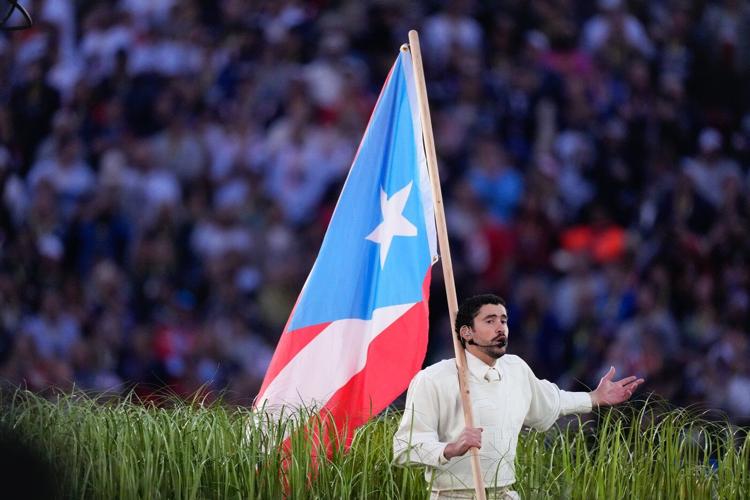
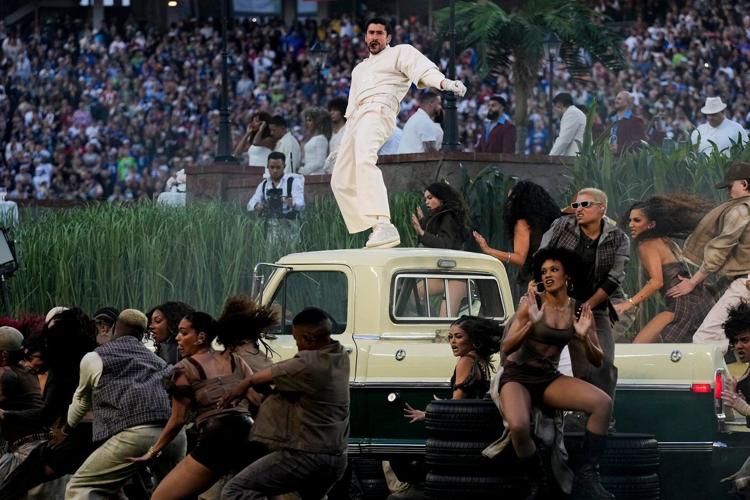
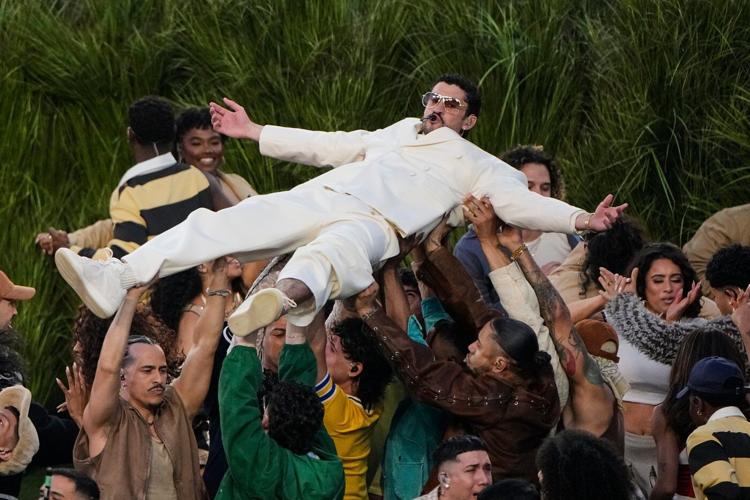
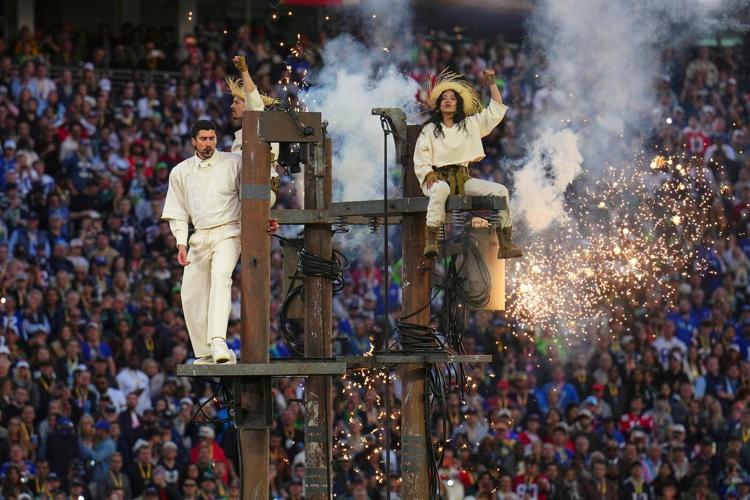
The sun hung low when Bad Bunny emerged in Puerto Rico's sugar cane fields during his halftime show, surrounded by jÃbaros in pavas (rural farmers in traditional straw hats), viejitos playing dominos (an affectionate term for older men) and a piragua stand (shaved ice) — undeniable symbols of Puerto Rico.
From a small Caribbean island with a complicated colonial history, to the world: The artist born Benito Antonio MartÃnez Ocasio brought Puerto Rican culture to the Levi’s Stadium in Santa Clara, California, for his halftime show in what was always going to be
He started with his huge reggaeton-and-then-some hits, “Tità Me Preguntó" moving into “Yo Perreo Sola,� as he remerged on top of the casita ("little house") from his Puerto Rican residency — , Jessica Alba and Pedro Pascal were guests at his pari de marquesina ("house party.")
Then he crashed through the roof — Daddy Yankee's “Gasolina� played for a moment, clearly an acknowledgement and celebration of the Puerto Rican artists who laid the path for his career to go global.
“Mi nombre es Benito Antonio MartÃnez Ocasio,â€� he introduced himself to the crowd in Spanish. “Y si hoy estoy aquà en el Super Bowl 60, es porque nunca, nunca dejé de creer en mà y tú también deberÃas de creer en ti, vales más de lo que piensas.â€�
In English: “My name is Benito Antonio MartÃnez Ocasio, and if I’m here today at Super Bowl 60 it’s because I never, ever stopped believing in myself and you should also believe in yourself, you’re worth more than you think."
The strings of his song “Monaco� played — then, a surprise Lady Gaga emerged at a wedding scene, singing her portion of “Die with a Smile,� her collaboration with Bruno Mars, joined by a salsa band. Her dress featured a maga, Puerto Rico's national flower.
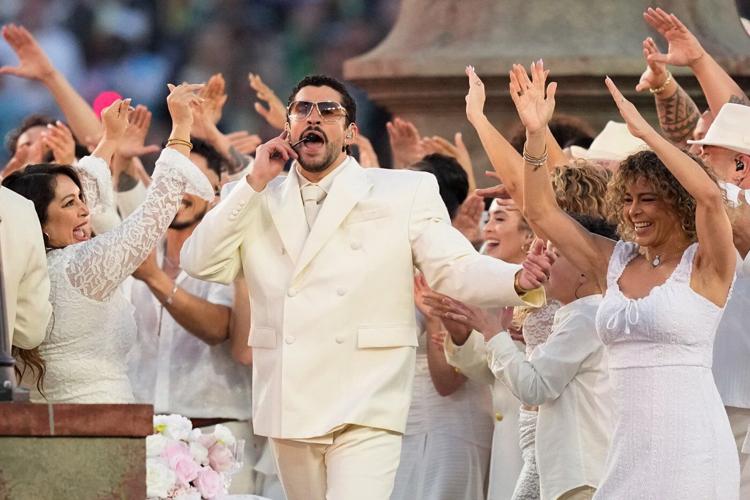
It gave Benito time for a fashion change — rocking a white suit like a classic salsero — for “Baile Inolvidable" and “NuevaYol," with a block party set where he took a shot with Tonita, owner of one of the last Puerto Rican social clubs in New York City, Brooklyn's Caribbean Social Club.
Ricky Martin, one of Puerto Rico's greatest crossover artists, performed Bad Bunny's “Lo Que Le Pasó a Hawaii,� (“What Happened to Hawaii�), a rallying cry for Puerto Rico’s in an era of neocolonialization. Martin sat in a plastic chair in front of a plantain tree; a scene that mirrored the cover of Bad Bunny's 2025 album
Behind Martin, jÃbaros in pavas climbed power poles that exploded, symbolic of Puerto Rico's frequent blackouts and failing power grid. It queued up a moving performance of 2022 song “El Apagónâ€� (“The Blackoutâ€�), in reference to its aftermath and the continued anger and frustration over persistent, .
As he sang one of his most political songs, Bad Bunny held a Puerto Rico flag in red, white and baby blue — reflective of the Puerto Rican independence movement.
For around 13 minutes during the halftime show sponsored by Apple Music and Roc Nation, all eyes on the field — and around the world — were on Benito Antonio MartÃnez Ocasio.
Bad Bunny performed entirely in Spanish — as all of his music is recorded in the language, though he has collaborated with English-language artists. The only English singing came from Gaga.
He did speak in English at the end of the set, however, when he said, “God Bless America,� and then named countries in the Americas: “Chile, Argentina, Uruguay, Paraguay, Bolivia, Peru, Ecuador, Brazil� and so on, including the United States and Canada — a reminder that while it is common to use “America� as a synonym for the U.S. in the U.S., it is the name used across two continents.
“And my motherland, mi patria, Puerto Rico, seguimos aquÃ." In English, “My homeland, Puerto Rico, we are still here.â€�
Behind him, a screen read “The only thing more powerful than hate is love� in English text, a direct reference to one of his recent speeches at the 2026 Grammys.
He ended with “DtMF� as he walked out of the stadium, joined by musicians with güiros (a percussive instrument made of a hollow gourd) and panderetas (tambourines, a symbol of plena.)
For years, Bad Bunny has been one of the And on Sunday, he made it clear that his global popularity translates seamlessly to the biggest stage in the U.S. (Though he is no stranger to it. He previously appeared during the halftime show at Super Bowl LIV in 2020 alongside and He sang in Spanish alongside two artists whose bilingual hits helped usher in a crossover era for Latin music in the ’00s.)
Consider Bad Bunny's 2026 halftime performance the cherry on top of a huge moment for the 31-year-old global superstar, who just 10 years ago was working at an Econo supermarket in Puerto Rico.
Last week, he at the 2026 Grammys for his an album that marries folkloric tradition in local Borinquen genres like bomba, plena, salsa and música jÃbara with contemporary styles like reggaeton, trap and pop. It marked the first time an all-Spanish language album won the top prize.
Like most headliners, Bad Bunny kept details of his halftime performance under wraps ahead of time, there would be some kind of political performance. He's been critical of President Donald Trump in the past and at the Grammys last Sunday, said while accepting a televised award. Bad Bunny's latest tour skipped the continental U.S.; in an interview he said it was at least partially inspired by concerns that his fans could be targeted by immigration agents.
At a Bad Bunny told Apple Music’s Zane Lowe and Ebro Darden viewers could expect a huge party — and joked that while viewers to enjoy his set; they should learn to dance.
“I want to bring to the stage, of course, a lot of my culture,� he said at the time. "I don’t want to give any spoilers. It’s going to be fun.�
Of course, he delivered on just that — with a message of hope and a reminder of Puerto Rico's resiliency.
___
For more on the Super Bowl, visit