

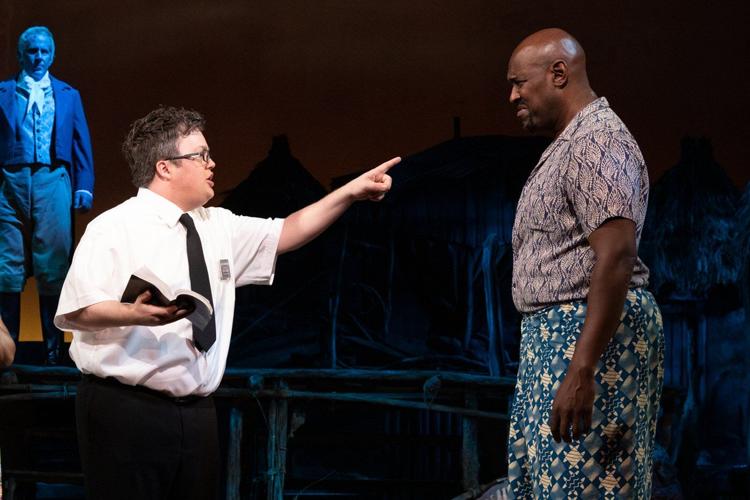



LOS ANGELES (AP) 鈥� Until quite recently, the prevailing image to outsiders of The Church of Jesus Christ of Latter-day Saints has been male missionaries wearing white shirts and name tags, evoked by the hit Broadway show 鈥淭he Book of Mormon.鈥�
But another unofficial face of the has emerged in American pop culture: digitally savvy, female influencers, often seen sporting athleisure, a giant soda in hand 鈥� and varying degrees of adherence to church teachings.
These found an enthusiastic audience across the country, curious about and families. Some explain the tenets of what's widely known as the , but others bring attention to the rules they often break 鈥� drinking alcohol, having premarital sex and in one high-profile instance, a 鈥渟oft-swinging鈥� scandal that birthed the hugely popular Hulu reality series, 鈥淭he Secret Lives of Mormon Wives.鈥�
ABC sought to capitalize on that interest by casting 鈥淢ormon Wives鈥� star Taylor Frankie Paul in 鈥淭he Bachelorette,鈥� but recently had to after a video of a domestic violence incident surfaced.
These viral moments and 鈥淢ormon Wives鈥� project a version of the faith that appears more progressive and lenient than church leadership and other Latter-day Saint influencers might like. 鈥淭he internet really challenged the church鈥檚 ability to maintain its own narratives about itself,鈥� said Nancy Ross, an associate professor at Utah Tech University who studies Mormon feminism.
Church says misrepresentation can have 鈥榬eal-life consequences鈥�
The church has worked to distance itself from 鈥淢ormon Wives,鈥� issuing a ahead of the first season鈥檚 premiere in 2024 without naming the show specifically. It said that some media portrayals of Latter-day Saint women resort to 鈥渟tereotypes or gross misrepresentations that are in poor taste and have real-life consequences for people of faith.鈥�
Camille N. Johnson, the president of the church鈥檚 Relief Society organization for women, said in an emailed statement that it鈥檚 important to seek out trusted sources of information about the church and its members in light of recent media attention.
鈥淢illions of Latter-day Saint women around the world strive to live faith-filled lives grounded in a love for God and all of His children,鈥� she said.
It would be impossible for the 鈥淢ormon Wives鈥� cast to fully represent millions of women in the church. But they are not the only Latter-day Saint influencers online 鈥� nor are they the only ones with large followings.
Many are women in their early twenties who are married with young children. They post about young motherhood and experiences like buying a house before they turn 25. , a Latter-day Saint content creator and podcast host, said she can see this being a foreign image to some.
鈥淥ur culture is fascinating to an outsider, and I can understand why it would pull people in,鈥� she said. 鈥淭hat Mormon timeline is intriguing to the rest of the world. I think most people innately have a desire for a happy marriage and a happy family life and we tend to create those in The Church of Jesus Christ of Latter-day Saints.鈥�
Cultural fascination with the church endures
The beliefs and practices of church members have often been the subject of intense interest and scrutiny because of how they differ from other religions. Some of these include the belief that church leadership can receive revelations from God, or the practice of wearing garments under clothing that have .
Latter-day Saint not a new phenomenon, but they have found staying power by driving pop culture discourse and documenting their lifestyles. Many of them use content creation as a way to be stay-at-home parents while also generating income for their families. Several prominent creators live in Utah, the home of the church鈥檚 administrative and cultural hub, but there is a broad spectrum in terms of how much they bring their faith into their content.
While 鈥淢ormon Wives鈥� and its controversial star, Paul, have been the recent high-profile drivers of public interest, the cast talks about the church only sparingly. Rosemary Avance, an assistant professor at Oklahoma State University whose research includes religious identity and digital media, said 鈥渢here鈥檚 so little reference鈥� to the cast's faith once people are hooked on the show from its title. Many cast members have left the church or are no longer active in it.
鈥淚t was clearly a marketing strategy on behalf of the people putting these shows together. They think that鈥檒l draw people in, and it does,鈥� she said. 鈥淚t鈥檚 not like you have these women sitting down talking about their secret temple practices that they鈥檙e not supposed to speak about, or challenging the authority of the church in some way. They鈥檙e just not talking about it.鈥�
Avance sees parallels between now and about 15 years ago, when Republican Mitt Romney was running for president and 鈥淭he Book of Mormon鈥� debuted on Broadway. At the time, people wanted to know 鈥渨hat鈥檚 going on behind the scenes in Mormonism,鈥� she said.
鈥淧eople think they know a lot about it (Mormonism), and they鈥檝e heard a lot about it because there鈥檚 prominent stories and prominent people who are well-known and those narratives are circulated, but it鈥檚 almost always second-, third-hand,鈥� she said. 鈥淎 lot of people don鈥檛 know any Mormons and may never meet a Mormon, or if they have, they don鈥檛 know it, and so it鈥檚 what you鈥檝e heard and the preconceptions you think you have about Mormonism.鈥�
鈥楽ecret Lives鈥� draws mixed reaction from influencers
Creators like Yarro, who speak about their faith openly online and closely follow the church's teachings, said 鈥淢ormon Wives鈥� does not feel representative of their experiences in the church or their lives in Utah. The Latter-day Saint content creators who spoke with The Associated Press emphasized they don't place fault on the individual cast members, but rather the production of the show and the way it Hollywoodizes their faith. Representatives for Hulu did not respond to a request for comment.
鈥淭he only thing I don鈥檛 like about what they do is sometimes they will play on things, twist things, use what is sacred to us as members of the church, and they鈥檒l put it out and it feels like mockery to us,鈥� said , another Latter-day Saint content creator.
Some of the more devout members use their online platforms to respond to and course-correct more salacious social media content or 鈥淢ormon Wives鈥� storylines they believe don't align with their understanding of church teachings or experiences.
, a Latter-day Saint content creator who says the mission behind her social media presence is to 鈥渟how that members of the church are real people,鈥� often makes videos responding to 鈥淢ormon Wives鈥� clips. She finds the show to be a 鈥渘et positive for our church鈥� since it gives everyday members the opportunity to 鈥渟hare what we actually believe and get that more out there into the world,鈥� she said.
Bascom, for one, had always prepared to serve on a mission but no longer could after getting married. Making content about the church has felt like a way she's 鈥渁ble to still live that out,鈥� she said.
鈥淲e want to be missionaries and spread the good word of the Gospel,鈥� she continued, 鈥渁nd so this is just another way we can do it.鈥�
___
Associated Press religion coverage receives support through the AP鈥檚 with The Conversation US, with funding from Lilly Endowment Inc. The AP is solely responsible for this content.