TALLAHASSEE, Fla. (AP) 鈥� A federal judge has barred state officials from enforcing a Florida law that would ban social media accounts for young children, while a legal challenge against the law plays out. U.S. District Judge Mark Walker issued the order Tuesday, blocking portions of the law from taking effect.
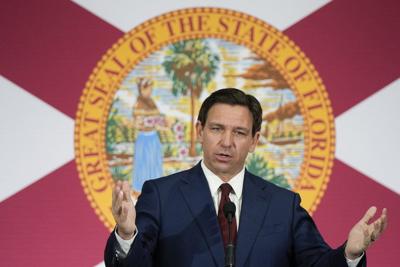
The measure was in the U.S. on when Gov. signed it into law in 2024. The law would ban social media accounts for children under 14 and require parental permission for their use by 14- and 15-year-olds.
In his order granting the preliminary injunction sought by the groups Computer & Communications Industry Association and NetChoice, Walker wrote that the law is 鈥渓ikely unconstitutional,鈥� but acknowledged that parents and lawmakers have 鈥渟incere concerns鈥� about social media's effects on kids.
Walker wrote that the prohibition on social media platforms from allowing certain age groups to have accounts 鈥渄irectly burdens those youths鈥� rights to engage in and access speech.鈥�
Also Tuesday, a federal judge in Atlanta heard arguments from NetChoice seeking to scheduled to take effect July 1 that would require age verification for social media accounts and require children younger than 16 to get parental permission for accounts. Like in Florida and other states where laws have been blocked, the internet trade group NetChoice argues that the Georgia law infringes on free speech rights, is vague, and overly burdensome.
While siding with the industry groups' claims that the law limits free speech, Walker allowed a provision of the Florida law to go into effect requiring platforms to shut down accounts for children under 16, if their parent or guardian requests it.
Parents 鈥� and even 鈥� are growing increasingly concerned about on young people. Supporters of the laws have said they are needed to help curb the among , and what researchers say is an associated increase in .
Matt Schruers, the president and CEO of the industry association CCIA, praised the judge's order blocking the Florida law.
鈥淭his ruling vindicates our argument that Florida鈥檚 statute violates the First Amendment by blocking and restricting minors 鈥� and likely adults as well 鈥� from using certain websites to view lawful content," he said in a statement. "We look forward to seeing this statute permanently blocked as a violation of Floridians鈥� constitutional right to engage in lawful speech online."
A spokesperson for Florida Attorney General James Uthmeier defended the law and the state's efforts at a time when platforms like TikTok, Instagram and Snapchat seem almost impossible to escape.
鈥淔lorida parents voted through their elected representatives for a law protecting kids from the harmful and sometimes of social media. These platforms do not have a constitutional right to addict kids to their products,鈥� Uthmeier's press secretary Jae Williams said in a statement. 鈥淲e disagree with the court鈥檚 order and will immediately seek relief in the 11th Circuit Court of Appeals.鈥�
In Atlanta, NetChoice attorney Jeremy Maltz told U.S. District Judge Amy Totenberg that Georgia's law would impermissibly restrict speech by minors, saying that 鈥渂efore you share your art, before you share your political information, you need to produce your papers, please.鈥�
Totenberg did not rule Tuesday. But citing rulings against similar laws in other states, she expressed skepticism about Georgia's case, asking Deputy Attorney General Logan Winkles: 鈥淲hat makes today different from all other days?"
Winkles argued the law's requirement of 鈥渃ommercially reasonable鈥� attempts to verify age could be quite cheap and likened it to banning minors from bars serving alcohol, not restricting their speech.
鈥淭here are things about social media that make it dangerous,鈥� Winkles said. 鈥淚t's a place where children are being restricted. It's not about speech.鈥�
鈥斺赌�
Associated Press writer Jeff Amy contributed from Atlanta.
___ Kate Payne is a corps member for The Associated Press/Report for America Statehouse News Initiative. is a nonprofit national service program that places journalists in local newsrooms to report on undercovered issues.