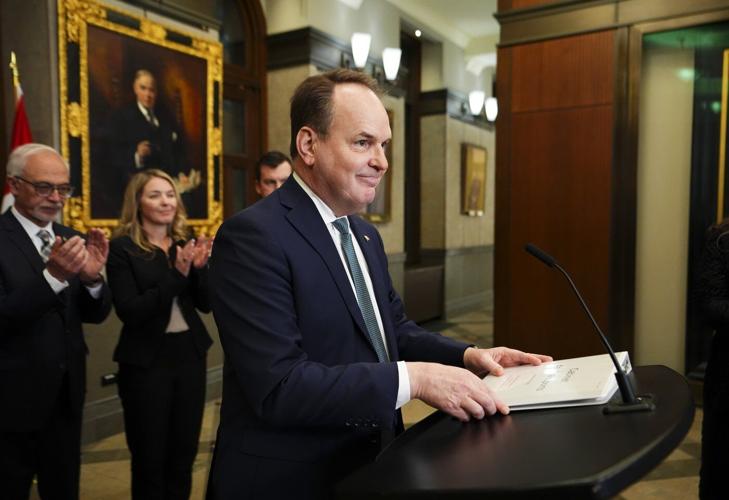
Leader of the Government in the House of Commons Steven MacKinnon holds a press conference in the foyer of the House of Commons on Parliament Hill in Ottawa on Tuesday, April 21, 2026. THE CANADIAN PRESS/Sean Kilpatrick
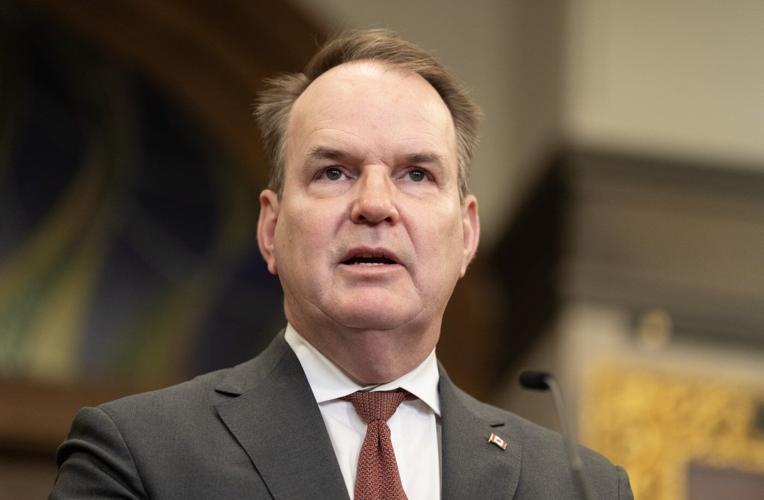
Steven MacKinnon, Leader of the Government in the House of Commons, speaks with reporters in the Foyer of the House of Commons on Parliament Hill in Ottawa, Wednesday, April 22, 2026. THE CANADIAN PRESS/Adrian Wyld
Leader of the Government in the House of Commons Steven MacKinnon holds a press conference in the foyer of the House of Commons on Parliament Hill in Ottawa on Tuesday, April 21, 2026. THE CANADIAN PRESS/Sean Kilpatrick
skp
Steven MacKinnon, Leader of the Government in the House of Commons, speaks with reporters in the Foyer of the House of Commons on Parliament Hill in Ottawa, Wednesday, April 22, 2026. THE CANADIAN PRESS/Adrian Wyld
OTTAWA - Liberal House leader Steven MacKinnon is defending the government's move to seize greater control over the parliamentary agenda.
MacKinnon said Wednesday he will soon move a motion to change the rules governing the House of Commons to ensure the Liberals have the most votes on committees.
He said members of Parliament from the governing party should hold a majority of the seats on House of Commons committees and rejected the suggestion the government will use its new powers to rush legislation through Parliament.
"From the start, we've made it very clear we want to work collaboratively with parties in the House. We don't want to play silly partisan games that wastes the time and the money of taxpayers," MacKinnon told reporters in the House of Commons foyer.聽
"We want to work together to achieve big things for the Canadians we all represent."
In a fundraising email to supporters, the Conservatives branded the move a "cynical power grab" that will make it easier for the government to avoid scrutiny.
Committees are a key step in examining legislation and holding the government to account through studies.聽
The opposition can leverage committees when they hold control over the committee agenda to force inquiries into scandals to put the government on its back heels. Opposition MPs can also revise bills and stymie the legislative process when they hold a majority vote.
Prime Minister Mark Carney's Liberal government was granted a majority earlier this month through a set of byelection wins, but those MPs have not yet been sworn in.
Once the motion to change the committee makeup is introduced in the House, it will kick off days of debate before it can pass.
Majority governments traditionally hold a majority of seats on House committees, but the rules of the current House of Commons, called the standing orders, were designed for a minority.
When the Liberals won a minority government in last April's election, MPs agreed to form committees with four Liberals, four Conservatives and one member from the Bloc Qu茅b茅cois.
But this motion would increase the number of Liberal representation on committees 鈥� something MacKinnon noted could have instead been a reduction of opposition MPs at the table.
MacKinnon is proposing most committees instead be made up of seven Liberals, four Conservatives and one Bloc member.
The Bloc would be the biggest loser, since it currently holds a deciding vote on committees.
Carney's Liberals secured their majority on April 13, when they swept three byelections in the Toronto area and the Montreal suburb Terrebonne, giving them 174 seats in the House of Commons.聽
The byelection results, combined with five opposition MPs who crossed the floor to the Liberals in recent months, vaulted Carney's party over the threshold for a majority 鈥� something it did not achieve in last year's general election.
The Liberals won 169 seats last April, shy of the 172 needed for a simple majority.
This report by 国产诱惑福利 was first published April 22, 2026.
鈥� With files from Sarah Ritchie and Catherine Morrison