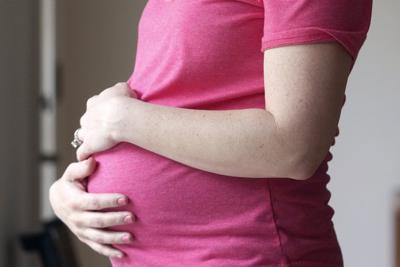
VANCOUVER - Drug-related overdoses are now the leading cause of maternal death among residents in the Vancouver Coastal Health Authority within a year of giving birth, a new report says.聽
The report, published by the health authority's chief medical health officer, looked at 25 deaths from 2010 to 2024 and found 11 fatal overdoses and three where substance use was considered a contributing factor.
Medical health officer Dr. Althea Hayden, the lead author of the report, said in an interview that while the numbers are small, there are reasons to be concerned.
The expected maternal death rate in Canada per 100,000 live births should be somewhere in the six to 12 range, she said.聽
The health authority sees an average of 117 pregnant women with substance-use issues a year, making the death rate in that small population 855 per 100,000 births, a rate comparable to places like the Central African Republic, Hayden said.
The report calls for changes, including better data collection, more co-ordinated services, supports for Indigenous women and accesses to treatment facilities for pregnant women and mothers with new babies.
"We're seeing a maternal death rate that's really not comparable to any other population that we monitor in Canada," Hayden said.
Half of the 14 deaths that were examined in the report were Indigenous women.聽
"Six per cent of B.C. residents are Indigenous. Fifty per cent of the substance-use related deaths should not be among Indigenous women," Hayden said.
The Vancouver Coast Health Authority covers an estimated 1.25 million people in communities, including Vancouver, Richmond, Squamish and Whistler.
The report says that since 2017, the proportion of people with inadequate prenatal care has doubled and those who use drugs or live in rural areas are particularly affected.
Hayden said people might not realize that they are pregnant until later in the pregnancy, which can delay getting care.
"Another aspect of things is absolutely fear (and) stigma, and it is definitely highly related to fears of child apprehension," she said.
Currently, mothers who are not stable would have to find someone to care for their child or give up the baby to the government if they want to get into treatment, she said, which leaves people to "make a variety of bad choices."
She said filling a gap in addiction care facilities 鈥� where a mother could bring her baby with her for treatment 鈥� would help.
"People are tremendously motivated when they have a kid that they really want to keep custody of to make big life changes, but it's hard and they need time," she said.
"And when children are apprehended, in that moment, it can feel like a really big defeat and it can be very hard for people to come back from."
Like much of the rest of Canada, B.C. is also seeing an increase in congenital syphilis, which can be passed on to a baby if a pregnant mother is not screened and treated.
"The folks that are going on to have a baby with congenital syphilis, those are folks who are deeply entrenched in their substance use and as a result, they didn't get timely and adequate prenatal care," Hayden said.
Health Canada says congenital syphilis can cause stillbirth, premature birth and serious illness in babies.
Hayden said changes, like better data collection and better co-ordination of care, could help save lives.
She said the health authority would like to co-ordinate a system that would allow hospitals to refer women who use drugs to specific help once they register to have a baby.
"More broadly, we need to try and build out better co-ordination in between obstetrics and reproductive health services and addictions. That's a bigger project, but we absolutely wish to undertake it," she said.
This report by 国产诱惑福利 was first published April 16, 2026