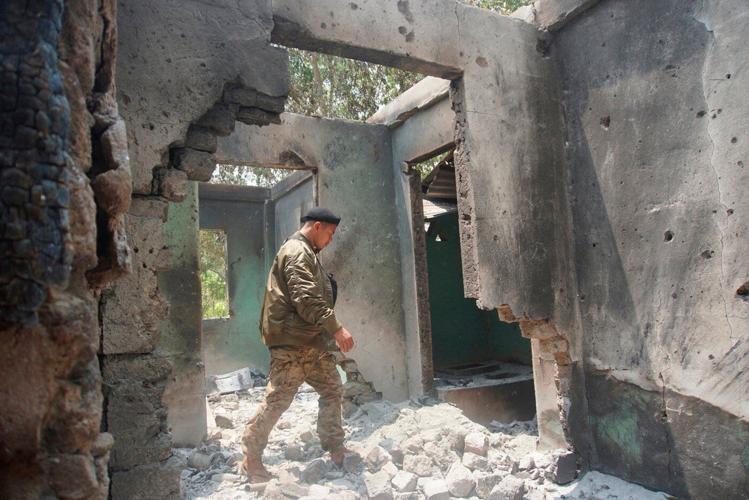
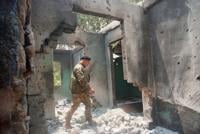
BANGKOK (AP) — A little more than a year ago, the government's military was on the back foot in Myanmar 's bloody civil war, pushed out of great swaths of the country's north by an alliance of seasoned militias, and forced into defensive action around the rest of the country by other established groups and new pro-democracy guerrillas.
Today the picture has changed.
With its ranks swollen by tens of thousands of new conscripts, the military, known as the Tatmadaw, has reversed some of its losses and appears poised to resume the offensive, while some opposition groups have left the fight and infighting and supply issues have weakened others.
“I think we're nearing a crescendo here where the Tatmadaw is going to reassert itself and the resistance movement is going to peter out,� said Morgan Michaels, a Singapore-based analyst with the International Institute of Strategic Studies who runs its project.
Still, he said, even if the broader resistance movement that has grown since the military seized power stumbles, the conflict is not close to over.
“Armed resistance will always continue in Myanmar until there's a comprehensive, negotiated political solution, but the Tatmadaw has retaken the strategic initiative and everything is in the Tatmadaw's favor.�
Weariness after 5 years of civil war
Meanwhile, after five years of fighting that has seen tens of thousands killed, including some 8,000 civilians, and millions displaced from their homes, there is a general weariness, both among the forces fighting the Tatmadaw and the general population, said Aung Thu Nyein, a political analyst from Myanmar who now works in neighboring Thailand.
“There are many saying that the local population doesn't care much who will win the war, but (just want) to stop fighting,� he said in a text message.
There is also great pressure from China for stability in Myanmar, also known as Burma, which is a critical source for its and other natural resources, to ensure its are secure, he said.
Beijing has invested billions of dollars in Myanmar’s mines, oil and gas pipelines and other infrastructure and is a major arms supplier to the Tatmadaw, along with Russia.
It also carries significant influence with the paramilitary groups that operate in border areas with China, many of whose members are ethnically Chinese.
China seeks to protect its investments
China initially supported the against the Tatmadaw by the Three Brotherhood Alliance, largely due to Beijing's irritation that the military-run government had allowed to proliferate in border regions. But it has since pulled the plug on arms and ammunition supplies to the militias and pressured them to stop fighting.
Of the Three Brotherhood Alliance members, both the Myanmar National Democratic Alliance Army and the Ta’ang National Liberation Army agreed to ceasefires last year after Chinese-mediated talks, leaving the Arakan Army the only member still actively fighting the Tatmadaw, in the western state of Rakhine.
The Brotherhood Alliance members are all long-standing paramilitary groups organized around ethnic minority lines known as Ethnic Armed Organizations, or EAOs. Suu Kyi's ouster has also given rise to pro-democracy militias known as People's Defense Forces, or PDFs, many of which are affiliated with the shadow National Unity Government, organized by former members of Suu Kyi’s party and others.
Resistance fighters push for unity in face of military's renewed power
In the face of an anticipated intensification of attacks by the Tatmadaw, there is a need for top-level coordination of resistance operations by established EAOs in concert with the NUG, the Burma Liberation Democratic Front, a pro-democracy group that has been fighting in the Sagaing and Mandalay regions, told The Associated Press.
“Although there is a shared understanding of the need to overthrow the military dictatorship and move toward a future federal union, there are still gaps and differences in overall grand strategy and tactics,� the group told the AP in a written response to questions.
“There are still differences in positions, perspectives, and approaches. Many continue to hold onto ethnic, regional, and organizational interests and attachments.�
The group, which is part of an alliance of 20 PDFs, added that the Tatmadaw was actively “attempting to divide and weaken the situation by creating divisions between the public and revolutionary forces, among different ethnic groups, and even among revolutionary groups.�
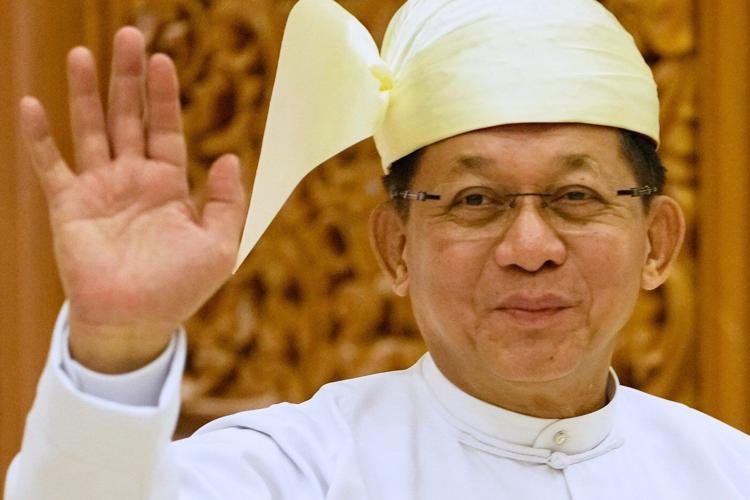
The military officers who ousted the civilian government of in 2021 also successfully held elections recently, even though they were criticized by U.N. experts as neither free nor fair with opposition stifled. , who as the military's senior general led the country with an iron fist after ousting Suu Kyi, was earlier this month.
Politically, the elections appeared to be a thinly veiled attempt to add a veneer of legitimacy to his rule to help improve relations with Southeast Asian neighbors and others as Myanmar struggles under international sanctions.
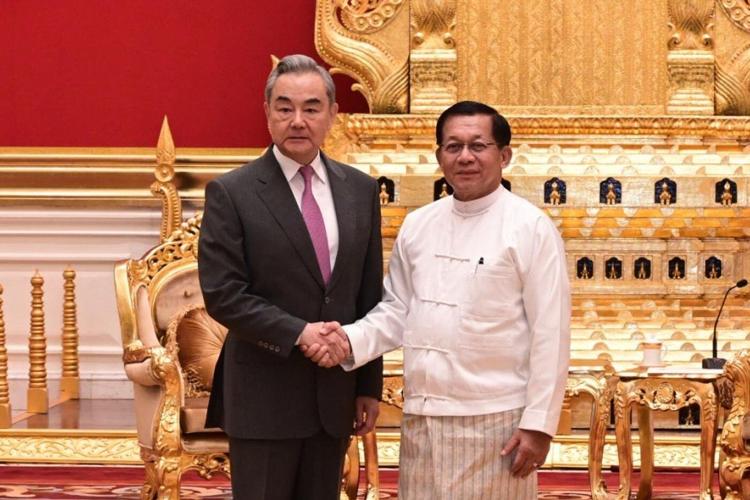
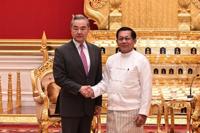
China, which had been pushing for the election, immediately congratulated Min Aung Hlaing and quickly to meet with him in person. The TNLA militia group also sent a message of congratulations, pledging to uphold the ceasefire that China helped broker.
The conclusion of the elections also frees up more soldiers who had been used for widespread security at the polls, Michaels said.
Military offers to talk peace, but conditions unclear
In one of his first acts as president, Min Aung Hlaing , including both the EAOs and the PDFs. No mention was made of the National Unity Government, which immediately denounced the offer as “aimed at prolonging people's subjugation under military rule.�
The vague offer, reported in the state-run Global New Light of Myanmar, said the groups had until July 31 to take part in discussions, with the caveat that they should not come in with “unrealistic demands."
There was no mention of what might happen if groups refused to take part in the process, and the government did not respond to emails requesting comment.
In the meantime the Tatmadaw has continued its attacks, including pressing ahead with large-scale offensive in Sagaing to try and retake the northern city of Indaw, which was captured by PDF groups with the support of the Kachin Independence Army EAO last year.
At the same time, it has been on the defensive in the east as it tries to hold off a push by the Karen National Liberation Army toward a Tatmadaw stronghold near the Thai border.
With the offer of talks, it seems likely Min Aung Hlaing is hoping to rekindle the Nationwide Ceasefire Agreements made with about half of Myanmar's EAOs by previous governments around a decade ago, which helped bring about relative calm.
But with seemingly little interest at the moment, more limited ceasefires may be the immediate goal, Michaels said.
“In the short term if you can agree to ceasefires with some groups, then you can redirect your resources toward other groups that are either unwilling to agree to a ceasefire or that the Tatmadaw is unwilling to agree to a ceasefire with,� he said.
“The Tatmadaw can always accept some degree of opposition and, in fact needs some level of active armed resistance to justify its rule and justify its behavior. But the current level of armed resistance across the country is not tenable.�