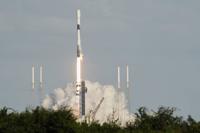
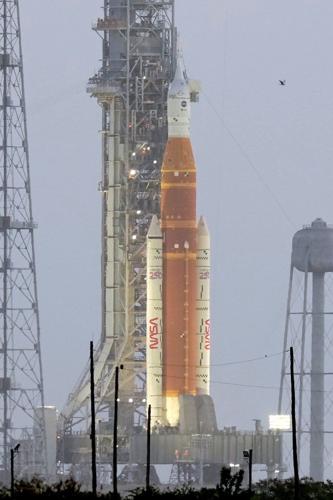
The four Artemis II mission astronauts have have entered the Orion capsule and are in place for humanity鈥檚 first trip to the moon in more than half a century, aiming for an evening liftoff.
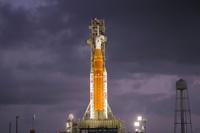
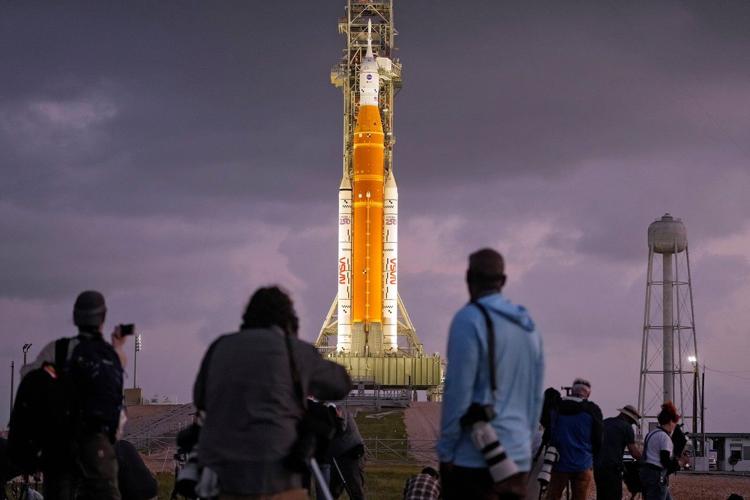
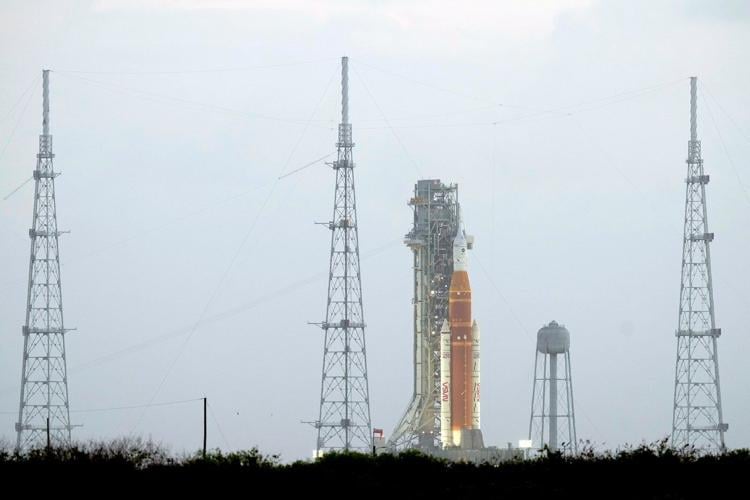
NASA's launch team had loaded more than 700,000 gallons of fuel into the 32-story Space Launch System rocket early Wednesday, setting the stage for blast off in the evening, with a two-hour launch window beginning at 6:24 p.m. EDT at Kennedy Space Center in Florida.
Reid Wiseman, Victor Glover, Christina Koch and Jeremy Hansen will be on board. They鈥檒l hurtle several thousand miles beyond the moon, hang a U-turn and then come straight back. No circling around the moon, no stopping for a moonwalk 鈥� just a quick out-and-back lasting less than 10 days. NASA promises more , but not before a couple practice missions.
Unlike the Apollo missions that sent astronauts to the moon from , Artemis鈥� debut crew includes .
Artemis II is the opening shot of NASA鈥檚 grand plans for a permanent moon base. The space program is aiming for a moon landing near the lunar south pole in 2028.
The Latest:
The Apollo generation, in their own words
Charlie Mars, 90, who worked on Apollo鈥檚 command and lunar modules: 鈥淏ecause it was the first time, there was an energy. There was a passion that probably is not exactly the same today and hasn鈥檛 been for a while.鈥�
JoAnn Morgan, 85, who was the lone female engineer inside launch control during the Apollo 11 landing:
鈥淚t will be even greater when they actually have a woman who plants her boots on the moon.鈥�
Charlie Duke, 90, Apollo 16 moonwalker: 鈥淚f the first ones are successful and we start landing at the south pole, I think millions are going to be watching that. I know I will if I鈥檓 still here.鈥�
How space toilets work
Everyone needs to go 鈥� even in space.
There were no bathrooms on the Apollo missions. Astronauts urinated into bags and diapers.
A primitive potty was aboard the U.S. space station, Skylab, in the 1970s. The International Space Station now features three bathrooms as the orbiting complex expanded.
The Orion capsule is equipped with a compact lunar loo that was tested on the space station several years ago.
Known as the universal waste management system, the titanium toilet uses air suction instead of water and gravity to remove waste, similar to earlier space commodes. It鈥檚 also designed to better accommodate female astronauts.
The system collects urine and solid waste separately 鈥� No. 1 is vented into space and No. 2 is stowed for the return trip.
8-year-old designer of 鈥楻ise鈥� toy on hand
Lucas Ye鈥檚 design for a zero gravity indicator was picked from more than 2,600 submissions to fly to the moon. It also won him a trip to watch the Artemis II launch from Kennedy Space Center.
The 8-year-old from California designed a plush toy called 鈥淩ise,鈥� inspired by the iconic 鈥矱arthrise鈥欌�� photo taken during Apollo 8.
Interviewed by NASA, he said he was, 鈥淩eally, really, really, really, really, really, really surprised and very happy鈥� to win and be here.
How Artemis II astronauts will stay fit in microgravity
To prevent bone and muscle loss in space, astronauts will keep in shape using a device that acts like a yo-yo.
They can do exercises such as rowing, squats and deadlifts.
Each astronaut will spend about a half hour a day exercising on the device, developed by the Canadian Space Agency.
Astronauts are in the capsule
The four Artemis astronauts have entered the Orion capsule and are in place for humanity鈥檚 first trip to the moon in 53 years.
After they arrived at the launch pad, they rode an elevator up to the capsule and signed their names to the so-called white room, where they stage for boarding.
They donned their helmets, made some final adjustments to the suits, and climbed into the capsule. If they take off as planned, they will remain in the capsule -- with about as much room as a small camper van -- for the next 10 days.
NASA鈥檚 liftoff lingo, defined
Watching a rocket launch can be confusing if you鈥檙e unfamiliar with the jargon, or specialized language, used by NASA.
Here鈥檚 a guide to some key terms:
1. LH2: liquid hydrogen
2. LOX: liquid oxygen
3. Go/no-go: Status check on whether to proceed.
4. Nominal: Everything is going as planned.
5. LAS: The launch abort system is the tower atop the Orion capsule designed to carry the crew to safety during an emergency.
6. Hold: A pause in the countdown clock.
7. Scrub: The launch attempt is canceled for the day. Reasons can include bad weather, technical problems or safety concerns.
Even moon launches are powered by pizza
NASA chief Jared Isaacman has had pizza delivered to the launch team in Cape Canaveral. It鈥檚 lunchtime for the team as the opening of the launch window at 6:24 pm EDT approaches.
What is the launch abort system on Orion?
It鈥檚 an escape system designed to ferry Artemis II astronauts to safety if there鈥檚 an emergency on the pad or during initial ascent.
A tower structure mounted on top of Orion can be activated to quickly rip the capsule and astronauts away from the SLS rocket and release it for a parachute splashdown in the ocean, according to Lockheed Martin.
Meet the Artemis II astronauts: Jeremy Hansen
The Canadian fighter pilot and physicist is making his space debut and serving as his country鈥檚 first emissary to the moon.
鈥淢aybe I鈥檓 naive, but I don鈥檛 feel a lot of personal pressure.鈥�
Hansen, 50, grew up on a farm near London, Ontario, before moving to Ingersoll and pursuing a flying career.
He realizes only now how much effort it took to send men to the moon during Apollo.
鈥淲hen I walk out and I look at the moon now, it looks and feels a little bit farther than it used to be,鈥� he said.
Dangers still loom 鈥� something he鈥檚 shared with his college-aged son and twin daughters. 鈥淭he most likely outcome is that we will come back safe. There鈥檚 a chance we won鈥檛, and you will be able to move through life even if that happens,鈥� he assured them.
Moon rockets: Space Launch System vs. Saturn V
The SLS rocket stands 322 feet (98 meters), shorter than the Apollo program鈥檚 Saturn V rocket. But it鈥檚 but more powerful at liftoff thanks to a pair of strap-on boosters.
Atop the rocket is the Orion capsule carrying the Artemis II crew.
The solid rocket boosters are bigger versions of the rocket motors on the space shuttles that carried up most of the parts of the International Space Station, as well as the astronaut construction crews.
The SLS uses the same fuel 鈥� liquid hydrogen 鈥� as the shuttle did.
Hydrogen leaks repeatedly grounded the shuttles as well as the SLS during testing in 2022 and again earlier this year, bumping Artemis II into April.
Meet the Artemis II astronauts: Christina Koch
The last time Koch blasted into space, she was gone almost a year so she鈥檚 not sweating a quick trip to the moon and back.
The 47-year-old electrical engineer from Jacksonville, North Carolina, holds the record for the longest single spaceflight by a woman 鈥� 328 days. She took part in the first all-female spacewalk during her lengthy stay at the space station in 2019.
Before she got called up by NASA, Koch spent a year at a South Pole research station. Between that and her space stint, she feels she鈥檚 鈥渋noculated鈥� most of her family and friends.
鈥淪o far, I haven鈥檛 gotten too many nerves from folks. Maybe my dog, but I鈥檝e reassured her that it鈥檚 only 10 days. It鈥檚 not going to be as long as last time.鈥�
Her and her husband鈥檚 rescue pooch is named Sadie Lou.
Meet the Artemis II astronauts: Victor Glover
As one of NASA鈥檚 few Black astronauts, Glover sees his presence on the mission as 鈥渁 force for good.鈥�
The 49-year-old Navy captain and former combat pilot from Pomona, California, makes it a habit to listen to Gil Scott-Heron鈥檚 鈥淲hitey on the Moon鈥� and Marvin Gaye鈥檚 鈥淢ake Me Wanna Holler鈥� from the white-dominated Apollo era.
鈥淚 listen to those for perspective,鈥� he said. 鈥淚t captures what we did well, what we did poorly.鈥�
The ability for him now to offer hope to others is 鈥渁n amazing blessing and a privilege.鈥�
He鈥檚 hyper-focused on running 鈥渙ur best race so that we can hand the baton off to the next leg鈥� 鈥� a 2027 practice docking mission in orbit around Earth between an Orion crew capsule and one or two lunar landers.
Astronauts head to the launch pad
Wiseman, Glover, Koch and Hansen have left the Neil Armstrong Operations and Checkout Building and are on their way to launch pad 39B.
Waving to family, colleagues and news photographers, the crew boarded the so-called astrovan for the 9-mile ride to the launch pad and their awaiting SLS rocket.
Wait what? What鈥檚 the deal with the cards?
Before their highly anticipated walkout, commander Reid Wiseman and his crew played a quick card game with NASA鈥檚 chief astronaut Scott Tingle. It鈥檚 a preflight tradition since the space shuttle era.
Losing is good: It means the astronaut has gotten rid of all bad luck before launching.
The four thanked the suit techs and posed for photos, keeping a safe distance from many of the bystanders to avoid germs. They then went down the elevator at the Neil Armstrong Operations & Checkout Building and walk out to a barrage of cameras and cheers.
They鈥檒l take a custom-designed astrovan for the ride to the launch pad
House Speaker shares prayer for Artemis鈥� 鈥榗ourageous pioneers鈥�
House Speaker Mike Johnson posted on the social media site X ahead of the planned Artemis II launch.
鈥淧raying for the safety and success of the Artemis II crew and as they undertake a mission that will carry humanity farther into space than we have gone in over half a century. I had the privilege of hosting these courageous pioneers at the State of the Union earlier this year. Americans are watching proudly as our Golden Age reaches new heights!鈥� Johnson wrote.
Meet the Artemis II astronauts: Reid Wiseman
Wiseman, 50, a retired Navy captain from Baltimore, was serving as NASA鈥檚 chief astronaut when asked three years ago to lead humanity鈥檚 first lunar trip since 1972.
His wife Carroll鈥檚 death from cancer in 2020 gave him pause.
His two teenage daughters, especially the older one, had 鈥渮ero interest鈥� in him launching again after a 2014 trip to the International Space Station.
鈥淲e talked about it and I said, 鈥橪ook, of all the people on planet Earth right now, there are four people that are in a position to go fly around the moon,鈥� he said. 鈥淚 cannot say no to that opportunity.鈥�
The next day, homemade moon cupcakes awaited him, along with his daughters鈥� support.
Who are Apollo and Artemis?
Artemis is the twin sister of Apollo in Greek mythology. They are the children of Zeus and Leto. Artemis has long been associated with the moon.
While the Artemis name builds on the Apollo program and pays homage to it, 鈥渢here is no way we could be that same mission or ever hope to even be,鈥� said NASA astronaut Christina Koch, part of the Artemis II crew.
The Apollo program was all about beating the Russians to the moon and planting the U.S. flag. NASA sent 24 astronauts to the moon between 1968 and 1972, including 12 moonwalkers. Now China is the competition.
NASA is striving for a long-term lunar presence under Artemis, with Mars to follow.
The astronauts are fitted out
The Artemis II astronauts are now in their orange Orion spacesuits that they will wear for launch and reentry. Testing these new suits is one of the main goals of the mission.
The four are expected to emerge for their trip to the pad sometime before 2pm.
NASA created bright orange custom spacesuits for launch and reentry. Astronauts will also use them in case of a depressurization or some other emergency.
They can survive up to six days in the suits, inserting a straw into the helmet to sip water or protein shakes and relying on undergarment bags and bladders as a built-in toilet.
Future Artemis crews to the lunar surface will wear white moonwalking suits designed by Axiom Space.
During the Apollo era, astronauts wore the same white bulky spacesuits for launch and return as well as for moonwalks because there wasn鈥檛 enough storage on board for different outfits.
An Apollo engineer reflects on moon return
鈥淲e should have done Artemis 50 years ago,鈥� said John Tribe, a propulsion engineer during the Apollo era.
The moon rocket is fueled up
The launch team has loaded more than 700,000 gallons of fuel into the 32-story Space Launch System rocket, setting the stage for the Artemis II crew to board.
Rain is coming but it鈥檚 not a threat
The wind is picking up at Cape Canaveral, more clouds are appearing and rain is expected in about two hours. But there is no lightning threat, NASA says, and there鈥檚 still an 80% chance the weather will be good enough to launch.
What鈥檚 the difference between L-minus and T-minus?
L-minus tracks the overall time to liftoff, counting down the days, hours and minutes away before the planned blastoff. It doesn鈥檛 include built-in holds, or pauses 鈥� that鈥檚 T-minus time.
The T-minus countdown in the final 10 minutes is where nerves tense up and hearts start pounding. Automated software kicks off a series of highly choreographed milestones. During this period, the clock can be stopped if a problem is spotted and restarted if it鈥檚 fixed in time.
T-0 is the moment of liftoff 鈥� zero 鈥� when the boosters ignite and the rocket begins its journey.
How launch windows work
NASA has a narrow time frame each month to fly to the moon.
The Earth and moon must be aligned just so to achieve the proper trajectory for the mission. In any given month, there鈥檚 only about a week when Artemis II astronauts can lift off.
The Orion capsule needs to get a check of its life-support and other systems in near-Earth orbit. If that goes well, Orion will fire its main engine to hurtle toward the moon, taking advantage of the moon and Earth鈥檚 gravity to get there and back in a slingshot maneuver that requires little if any fuel.
Orion also needs sunlight for power and can鈥檛 be in darkness for more than 90 minutes at a time. Plus NASA wants to minimize heating during reentry at flight鈥檚 end.
The latest launch window runs through April 6. The next opportunity opens on April 30.
Hydrogen is on board
The hydrogen tank of the rocket鈥檚 core stage is 100% filled. NASA said no significant leaks have been observed so far in fueling. It was that prevented the rocket from flying in February.
Time to wake up and go to the moon
The alarm clocks just went off in Kennedy Space Center鈥檚 crew quarters.
That means it鈥檚 rise and shine for the three Americans and one Canadian who are about to become the first lunar visitors in more than 53 years.
They have a long day ahead of them, whether they launch or not.
After breakfast, they鈥檒l start suiting up. NASA鈥檚 launch window opens at 6:24 p.m. and lasts a full two hours.
NASA controllers wear green for go
Launch director Charlie Blackwell-Thompson is wearing green as are many of the controllers alongside her in the firing room.
Green represents 鈥済o鈥� for NASA, a color symbolizing good luck.
The team is monitoring the fueling of the 322-foot moon rocket, set to blast off Wednesday evening.
Moon mascot, unveiled
A plush toy named Rise will ride with the Artemis II astronauts around the moon, carrying the names of more than 5.6 million people.
Rise is what鈥檚 known as a zero gravity indicator, which gives the astronauts a visual cue of when they reach space.
The design was inspired by the iconic 鈥淓arthrise鈥� photo during Apollo 8, showing the planet as a shadowed blue marble from space in 1968.
Rise was selected from more than 2,600 contest submissions. It was designed by Lucas Ye of California.
Commander Reid Wiseman and his crew tucked a small memory card into Rise before the toy was loaded into the Orion capsule. The card bears the names of all those who signed up with NASA to vicariously tag along on the nearly 10-day journey.
鈥淶ipping that little pocket on the bottom of Rise was kind of the moment that put it all together for me,鈥� Wiseman said. 鈥淲e are going for all and by all. It鈥檚 time to fly.鈥�
Rocket fueling is underway for NASA鈥檚 Artemis II moon launch
NASA is fueling the new rocket that will send four astronauts to the moon.
Launch teams have begun pumping more than 700,000 gallons (2.6 million liters) of liquid hydrogen and liquid oxygen into the Space Launch System rocket at Kennedy Space Center in Florida.
It鈥檚 the latest milestone in the two-day countdown that kicked off on Monday when launch controllers reported to duty.
It will take at least four hours to fully load the rocket before astronauts climb aboard for humanity鈥檚 first flight to the moon since Apollo 17 in 1972.
The two-hour launch window opens at 6:24 p.m. EDT.
鈻� Read more about
The Artemis II crew is historic for NASA鈥檚 moon missions
The Americans who blazed the trail to the moon more than half a century ago were white men chosen for their military test pilot experience.
The Artemis II crew includes a woman, a person of color and a Canadian, products of a more diversified astronaut corps.
鈻� Read more about