
Canada's justice minister is brushing aside calls from four premiers to start appointing judges at the provincial appeal and superior court level that are pre-approved and recommended by their governments.
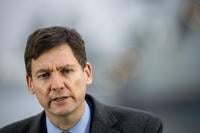
"We're not contemplating a sea change in the manner of which judges are appointed," Sean Fraser told reporters in Ottawa on Tuesday.
"We haven't changed our point of view that we believe that the judicial appointments process is functioning."
The premiers of Ontario, Quebec, Alberta and Saskatchewan made the request in a letter to Prime Minister Mark Carney shared on Tuesday.
In the letter, the premiers point to similar processes in the United States, Australia and parts of Europe, and say reforms are needed in Canada to maintain public confidence in the courts.
"Active engagement of our governments will help ensure that judicial appointments appropriately reflect the diversity and the unique needs of each province and territory," reads the letter, dated Monday.
Fraser said he believes the current appointment process is working well 鈥� a process that already takes provincial considerations into account.
"If they have substantive concerns about the judges that are being appointed, they should say so, but my perspective right now is that when they have been invited, up until very recently, we've seen willingness to participate," Fraser said.
He said he hadn't spoken with the premiers since the letter was shared but that he planned to discuss it with his provincial justice counterparts.
Ontario Premier Doug Ford said he expected to receive a response from Carney and noted that the four provincial signatories represent much of Canada's population.
"I think we deserve a say on who the appointment is going to be," he told reporters in Toronto.
Premiers Scott Moe in Saskatchewan and Quebec's Francois Legault 鈥� who is expected to step down from the role next month after his Coalition Avenir Qu茅bec announces his successor as party leader 鈥� reiterated on social media that provinces need more say.
"Provinces know their communities best," Moe said.聽
Quebec's justice minister, Simon Jolin-Barrette, speaking in French at the province's national assembly, said it was about boosting the legitimacy of the courts.
"It鈥檚 like when you have a referee 鈥� it鈥檚 much better to appoint them jointly to ensure their legitimacy," he said.
Duff Conacher, the co-founder of political advocacy group Democracy Watch, said in a statement that the judicial appointment process was already too partisan and that the premiers' proposal would only make things worse.
"The real solution is to make appointment processes across Canada fully independent, non-partisan and merit-based," Conacher said.
The four premiers who signed the letter have all invoked the Charter's notwithstanding clause in legislation to ensure their laws weren't overturned in the courts 鈥� something other sitting premiers have yet to do.
Alberta Premier Danielle Smith and Ford have also openly criticized the courts for decisions they oppose.
The letter comes after Smith made a similar request earlier this year and threatened to withhold some court funding unless Ottawa took action. Her justice minister told reporters last week that the government's new budget maintains normal funding and that the premier "made a point."
Smith proposed in a January letter to Carney that a new type of committee be struck to assess potential judicial appointees in her province. The committee would feature an equal number of provincial and federal representatives.
Fraser also rejected that request from Smith.
The Canadian Bar Association and its Alberta chapter criticized the premier at the time for trying to make judicial appointments a political issue when she said her proposal would "ensure judicial decision-making reflects the values and expectations of Albertans."
"Judges must fairly and independently apply the law, not produce outcomes that suit the government of the day," the association's president and Alberta president wrote in a February statement.
The statement also noted that Alberta's government has an appointee on the existing seven-person committee that assesses applications from lawyers to potentially be appointed and makes recommendations to Ottawa.
Similar committees exist for every province and territory.
This report by 国产诱惑福利 was first published March 24, 2026.
鈥� With files from David Baxter in Ottawa and Caroline Plante in Quebec City