MONTREAL - A proposed merger between two big American railways will hurt competition and drive up consumer costs across the continent.
Or it will drive them straight down. It depends who you ask.
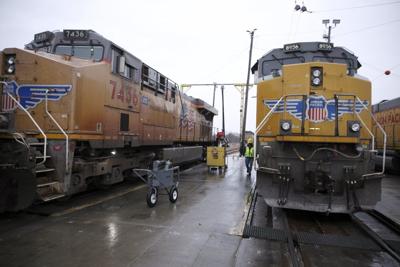
Union Pacific Corp., the second-largest railroad operator in the United States, announced in July it wants to buy Norfolk Southern Corp. 鈥� the third-largest 鈥� in a US$85-billion deal that would create that country鈥檚 first transcontinental railway, and potentially trigger a wave of rail mergers across North America.
The topic has been churning through boardrooms, ballrooms and train yards over the past eight months, as fears of market consolidation and lopsided power dynamics between rail carriers and shippers bubble up.
The prospect has also drawn stiff resistance from some of the continent鈥檚 railway giants, with Keith Creel, CEO of Calgary-based Canadian Pacific Kansas City Ltd., among its most vocal critics.
He argues that without major conditions the acquisition would damage competition, cost customers and place unprecedented market power in the hands of a single railway, which would handle some 40 per cent of American freight traffic.
鈥淔orty per cent of everything is a lot,鈥� Creel said at conference in Washington, D.C., on Wednesday.
鈥淵ou create this Goliath of (Union Pacific-Norfolk Southern), which is going to be seven times the size of CPKC.鈥�
Measured by revenue, CPKC is the smallest of the six remaining Class One freight railroads, though its tracks now stretch farther than those of Montreal-based Canadian National Railway Co. since Canadian Pacific acquired Kansas City Southern to form CPKC in 2021. Hauling everything from potash to petroleum, the company extended its sprawling network from Canada through the southern states to Mexico 鈥� no competitor spans all three countries 鈥� and marked the continent鈥檚 first big rail merger in more than two decades.
CN chief executive Tracy Robinson has taken a more moderate stance, saying the applicants have 鈥渁 long way to go鈥� to address questions around competition.
鈥淭he impact on CN would be less than that of the other railroad,鈥� Robinson told analysts on a call in January, referring to Canadian Pacific, 鈥渂ut it won鈥檛 be zero.鈥�
The planned merger would marry Union Pacific鈥檚 vast rail network in the Western U.S. with Norfolk鈥檚 rails that snake across the country鈥檚 eastern half. The combined railroad would include more than 80,000 kilometres of track in 43 states with connections to major ports on both coasts.
The goal is efficiency. Among the four big U.S.-based railways, the Mississippi River acts as a rough dividing line separating Union Pacific and BNSF in the west from Norfolk Southern and CSX in the east. Rather than have thousands of containers transferred from one railway to another within the same riverside city 鈥� St. Louis, Memphis, New Orleans 鈥� the merger would allow for more fluid traffic flow and end-to-end operational control, proponents argue.
They say it would shave off between 24 and 48 hours of transit time, nabbing business from diesel-guzzling semi trucks and slashing costs. It would allow for more streamlined corporate operations and could even prompt rivals to lower their rates to compete, backers say.
A bigger railway would 鈥渇orce our competitors to do better,鈥� Union Pacific CEO Jim Vena said at a Chicago rail conference earlier this month. 鈥淚f they can鈥檛 meet our service ... then they have to do it only one way, and that is price.鈥�
Opponents foresee different ramifications of the deal, including more acquisitions. CSX, one of the three smallest railways alongside CN and CPKC, looks particularly ripe for the picking by a larger player.
鈥淏NSF would be logical. But BNSF has gone out of its way to say, 鈥榃e鈥檙e really not interested鈥� 鈥� for now,鈥� said TD Cowen analyst Jason Seidl.聽
Clients of Union Pacific and Norfolk Southern aren鈥檛 so enthusiastic about the merger either.
Major trade bodies representing heavy hitters in the energy, chemicals, agriculture and construction industries 鈥� Chevron, ExxonMobil, DuPont, Dow and Canada鈥檚 Nutrien among them 鈥� oppose the merger. Several large transport unions, including two representing more than half of the unionized workers at Union Pacific and Norfolk Southern, have also come out against it.
鈥淚t鈥檚 always bad for the customer,鈥� argued John Corey, president of the Freight Management Association of Canada.
鈥淣o matter what they say as far as cost savings or benefits to competition or the shareholders ... they鈥檙e going to raise the rates on their existing customers,鈥� he claimed, though it remains a matter of debate whether previous mergers sparked a price spike.
As for rival railways, auto shipments mark one vulnerability, particularly for Canadian Pacific. The company competes with Union Pacific for car cargo running north-south between Ontario and Mexico.
鈥淭hey're worried about business being siphoned off,鈥� said Anthony Hatch, a transport analyst and founder of ABH Consulting. 鈥淯P would use their market power to say, 鈥業'll cut you a break here if you give me business there.鈥欌��
On Jan. 16, the U.S. rail regulator rejected the UP-NS merger application as incomplete and asked the parties to flesh it out. Union Pacific has said it plans to resubmit by April 30, with a final decision by the Surface Transportation Board expected next year.
Speculation has swirled that the merger might win approval under U.S. President Donald Trump鈥檚 pro-business administration. But Hatch described the regulatory board as 鈥渉onest鈥� and 鈥渟mart.鈥� A Trump-led government by no means guarantees a green light for the acquisition, he said.
鈥淭his is going to be a fight between big Republican interests 鈥� the chemical industry, the oil industry, the agribusiness industry, the auto industry, the steel industry, the housing industry,鈥� Hatch said.
鈥淚f they were to oppose this merger, why would any president in their right mind try to ram this through?鈥�
Seven Republican state attorneys general have asked the antitrust division of the U.S. Department of Justice to review the deal, arguing it would hurt competition and the economy.聽
While upbeat about their would-be nuptials, the two railways face a higher bar than previous mergers. Since 2001, following a wave of consolidation in the 1990s that led to weeks-long shipment delays, big railways looking to tie the knot have had to show the corporate marriage would enhance competition 鈥� rather than merely preserving it 鈥� and serve the public interest. As a result, CN failed to acquire Kansas City Southern in 2021, more than two decades after its ill-fated merger attempt with BNSF.
鈥淭he benefit box is going to have to be fuller than the harm box, or you鈥檙e never going to satisfy a definition that says you鈥檙e serving the public interest,鈥� Creel said.
This report by 国产诱惑福利 was first published March 22, 2026.
Companies in this story: (TSX:CP, TSX:CNR)