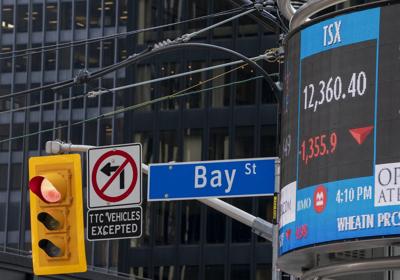
The U.S.-Iran war has roiled commodity and stock markets while stoking inflationary fears, but experts caution investors against emotionally driven changes to their portfolio.
Investors have seen oil prices surge to top US$120 per barrel at one point this week and major North American stock indexes tumble. Comments from U.S. President Donald Trump signalling the conflict might've run its course eased some concerns, but as the situation evolves, many investors are left wondering how to best position their portfolios.
鈥淭he biggest mistake investors make usually comes from reacting emotionally to the noise rather than sticking to the long-term plan,鈥� said Nick Hearne, a financial adviser and portfolio manager at RGF Integrated Wealth Management.
鈥淚t's that emotional reaction itself rather than the geopolitical event that causes the most harm to the portfolio.鈥�
He said well-balanced portfolios are designed for all types of market conditions.
鈥淰olatility feels uncomfortable, but it's a normal part of investing,鈥� Hearne said.
Angelo Kourkafas, senior global investment strategist at Edward Jones, said diversification has helped portfolios withstand some of the rotations that have occurred 鈥渂eneath the surface鈥� in markets this year. 聽
鈥淲e still remain in a headline-driven market. That's no doubt uncomfortable for investors, but keeping that long-term perspective during these times of volatility is very important because we know that headlines can change in an instant,鈥� Kourkafas said.
He said piece of advice for investors to keep in mind is to 鈥渁void playing geopolitics with your portfolio.鈥� When looking at portfolios over the past 20 years, he said those that stay fully invested generally fare better than those that take a months-long pause after geopolitical disruptions.聽
鈥淗istorically, these types of geopolitical shocks tend to have a short-lived market impact. We can point to several of these events over the last 15 years that have produced temporary oil spikes like we are experiencing today, but with very limited broader market fallout,鈥� Kourkafas said.
In a note to investors last week, he said oil prices frequently rise around the time of major events and peak shortly after. For example, he said oil prices peaked 10 days after the Israel-Iran war in the summer of 2025 and about three months after Russia's invasion of Ukraine in 2022.
Kourkafas also said structural shifts have reduced the vulnerability of North American economies to oil shocks. He said Canada is 鈥渦nique鈥� in that oil producers in the country benefit from higher crude prices, and noted that the U.S. became a net oil exporter in 2019.
A report from Capital Economics published Monday said if the conflict is limited to a matter of weeks, economies outside the region would see little effect on their gross domestic product, inflation and monetary policy.聽
But with a war that stretches months and causes lasting damage to Persian Gulf energy infrastructure, there could be a global recession coupled with higher interest rates, Capital Economics said. 聽
While inflation is a key risk to monitor, Kourkafas said consumers do not appear to be expecting sustainably higher prices at this time.
"So far, it is encouraging that even though short-term inflation expectations have risen, looking at five and 10 years, the longest-term market-based inflation expectations have stayed fairly steady and anchored," he said.聽
If the current conflict doesn't last more than a couple of weeks or months, then Kourkafas said markets are likely to revert to their previous conditions "once the dust clears."聽
"We're not out of the woods yet, but once we are, I think now is the time to start thinking about if things normalize, where are the opportunities? ... Historically, these geopolitical-driven pullbacks have been opportunities," he said.聽
After three consecutive years of strong stock market performance, Hearne said the current swings in the market could be a good time for investors to evaluate their portfolio and look at taking some profits or capitalizing on buying opportunities.聽
鈥淰olatility can be a useful moment for investors to rebalance. But it's important not to confuse those discipline adjustments with reactive decisions,鈥� he said. 聽聽
鈥淩ebalancing could involve trimming positions that have grown beyond their target weight, and then reinvesting that into areas that are underweight and may represent opportunities to buy. Differentiating the two is really key.鈥澛�
This report by 国产诱惑福利 was first published March 13, 2026.